
The short version
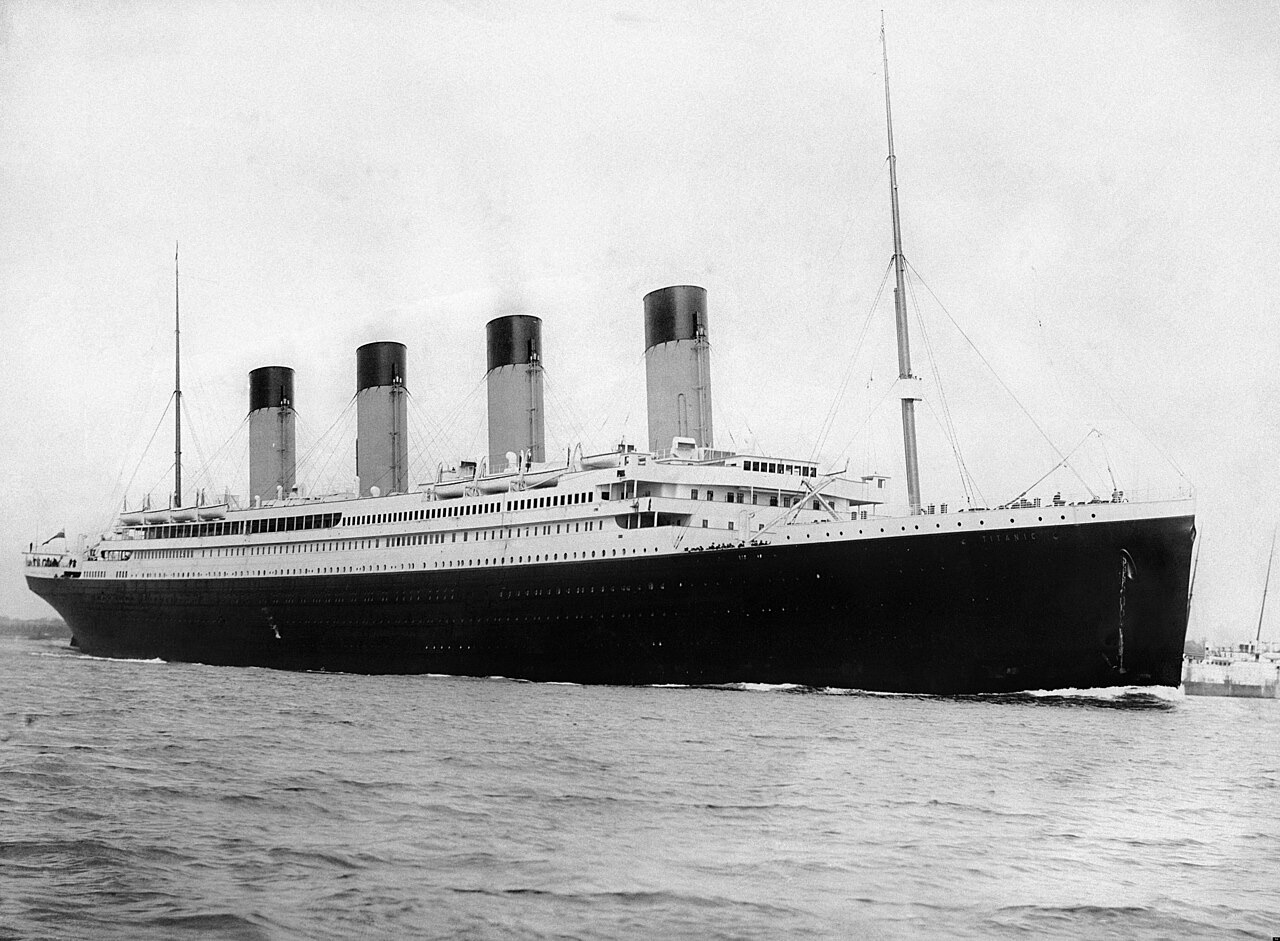
The Titanic and the Olympic were sister ships, built side by side in Belfast to almost the same design. Months before the Titanic sailed, the Olympic was holed in a collision with a warship. The switch theory, set out in books by Robin Gardiner from 1995, suggests that the owners may have disguised the damaged Olympic as the new Titanic and planned to sink it to collect the insurance, with a rescue ship standing by, and that the plan went wrong. Researchers who have studied the ships answer that the insurance did not cover the cost of the Titanic, that the two ships differed in visible ways, and that the Titanic’s yard number has been found on the wreck.
The two ships
The Olympic and the Titanic were built by Harland and Wolff in Belfast for the British White Star Line, which was controlled by J. P. Morgan’s American shipping trust, International Mercantile Marine. The shipyard gave them the numbers 400 and 401. Work on the Olympic began in December 1908 and on the Titanic three months later. The Olympic made its first voyage in June 1911. The Titanic cost about £1.5 million to build.
What happened to the Olympic
The collision. On 20 September 1911 the Olympic, under Captain Edward Smith, who later commanded the Titanic, collided with the Royal Navy cruiser HMS Hawke off the Isle of Wight. The cruiser tore holes in the liner’s hull and two watertight compartments flooded. The Olympic was patched up, taken back to Belfast and repaired, and the repairs were completed in November 1911.
The court case. In December 1911 the Admiralty Court blamed the Olympic’s navigation. White Star did not have to pay for the warship, because the liner was under the control of a compulsory pilot, but it could not recover its own costs either. Estimates of the repair bill vary widely, from about $125,000 in one 1911 report to £200,000 in an Australian newspaper.
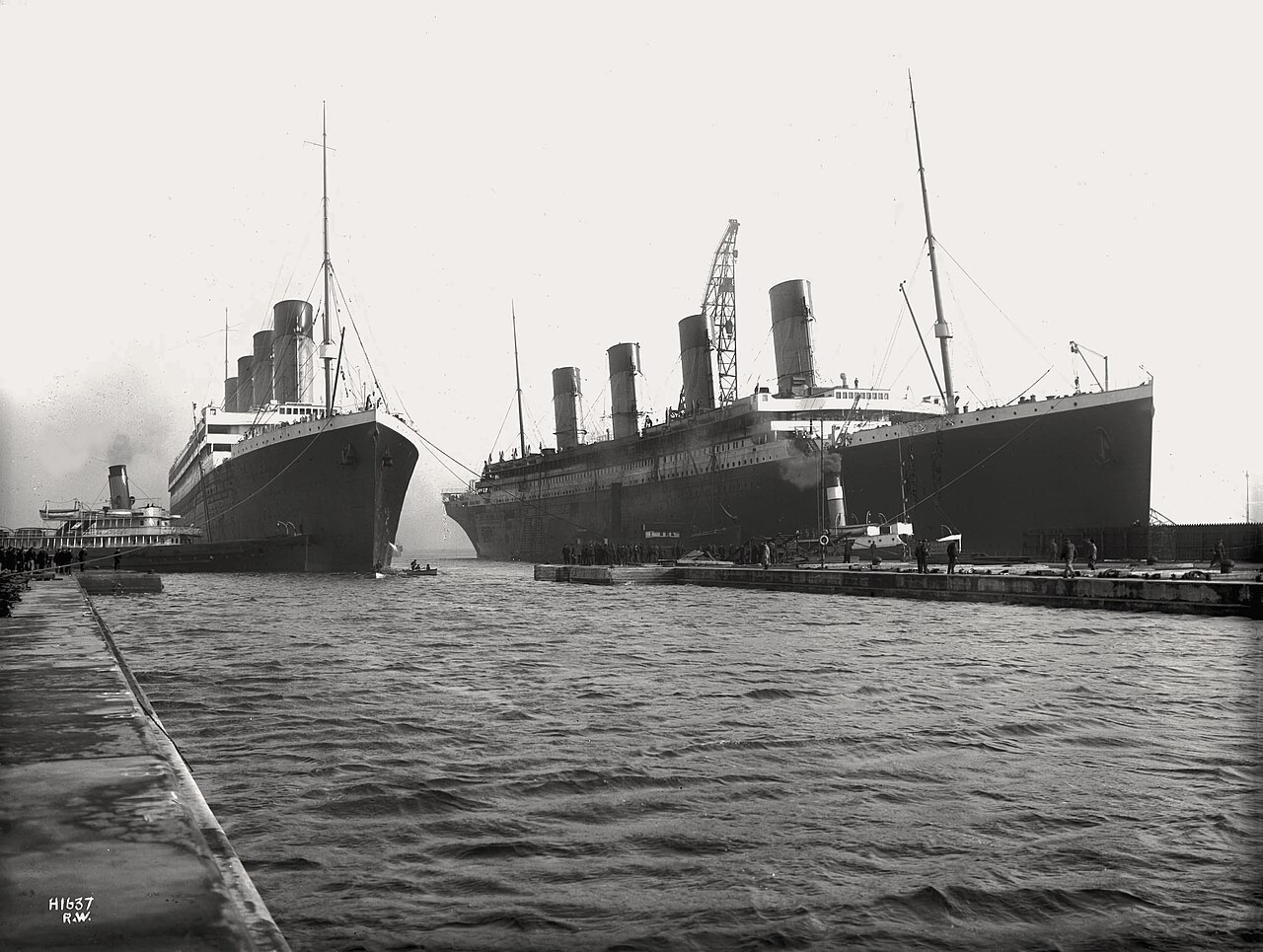
The propeller. In February 1912 the Olympic lost a propeller blade at sea and went back to Belfast again. Both repairs took workers and the dry dock away from the Titanic, whose maiden voyage was put back from 20 March to 10 April 1912. For a few days that March the two ships were afloat side by side, the only time they ever were.
The theory
In his book, Gardiner put it cautiously. The collision, he wrote, “may have caused more serious damage to the liner than its owners were prepared to admit”, and the owners and builders “might have decided to switch the brand new Titanic with her slightly older sister”. They might then have resolved to dispose of the damaged ship so as “to collect on their insurance”. In his version another ship was to take everyone off before the ship was sunk. “If the plan had worked, all aboard Titanic might have been saved,” he wrote.
Gardiner’s first book, written with the naval historian Dan van der Vat, appeared in 1995. Van der Vat later wrote that the theory did not stand up. Gardiner went on alone with a second book in 1998. The idea has spread widely on social media since. One TikTok video claiming that “the Titanic never sank” was viewed 11 million times before it was removed.

The arguments, point by point
The portholes
Believers say: the Titanic had 14 portholes in a row near the bow on one deck, and the Olympic had 16. Photographs of the ship leaving Southampton show 16.
The response: the researcher Steve Hall says the Titanic was launched with 14 and had two more added during fitting out, by December 1911. Hall and Bruce Beveridge say the Olympic was also given 16 later, by March 1912. Other researchers date the Olympic’s change later in 1912.
The insurance
Believers say: the owners had a damaged ship on their hands and every reason to collect on it.
The response: the Titanic cost about $7.5 million and was insured for $5 million, about £1 million. “This ship was insured from outside underwriters for $5,000,000,” an executive of the shipping trust testified in 1912. The Olympic carried the same £1 million cover. The historian J. Kent Layton has said the theory “falls apart — quite literally — on its financial merits alone”. The researcher Mark Chirnside notes that a smaller loss would still have been preferable if the Olympic had been a write-off, but calls such a fraud a drastic measure by any standards. The damage surveys sworn in court describe damage that was repaired within weeks. White Star’s accounts for 1911 also showed a surplus of more than £1.1 million.
J. P. Morgan stayed at home
Believers say: Morgan, whose trust owned the line, cancelled his passage at the last minute.
The response: Morgan did not sail, and the reason has never been settled. Explanations put forward include buying art in France and illness. A Reuters fact-check found no evidence that he knew the ship would sink. Senior figures from both companies did sail: J. Bruce Ismay, the chairman of White Star, survived, and Thomas Andrews, the managing director of Harland and Wolff, died.
The Californian
Believers say: the nearby Californian saw distress rockets and did nothing. Gardiner linked its behaviour to his planned rescue.
The response: the British inquiry did find that the Californian could have reached the Titanic if it had tried when it saw the first distress rocket. Chirnside replies that this does not show it was part of any plan.
Letters on the hull
Believers say: Gardiner wrote that underwater video showed the letters “M” and “P” beneath the raised name, letters that are in “Olympic” but not in “Titanic”.
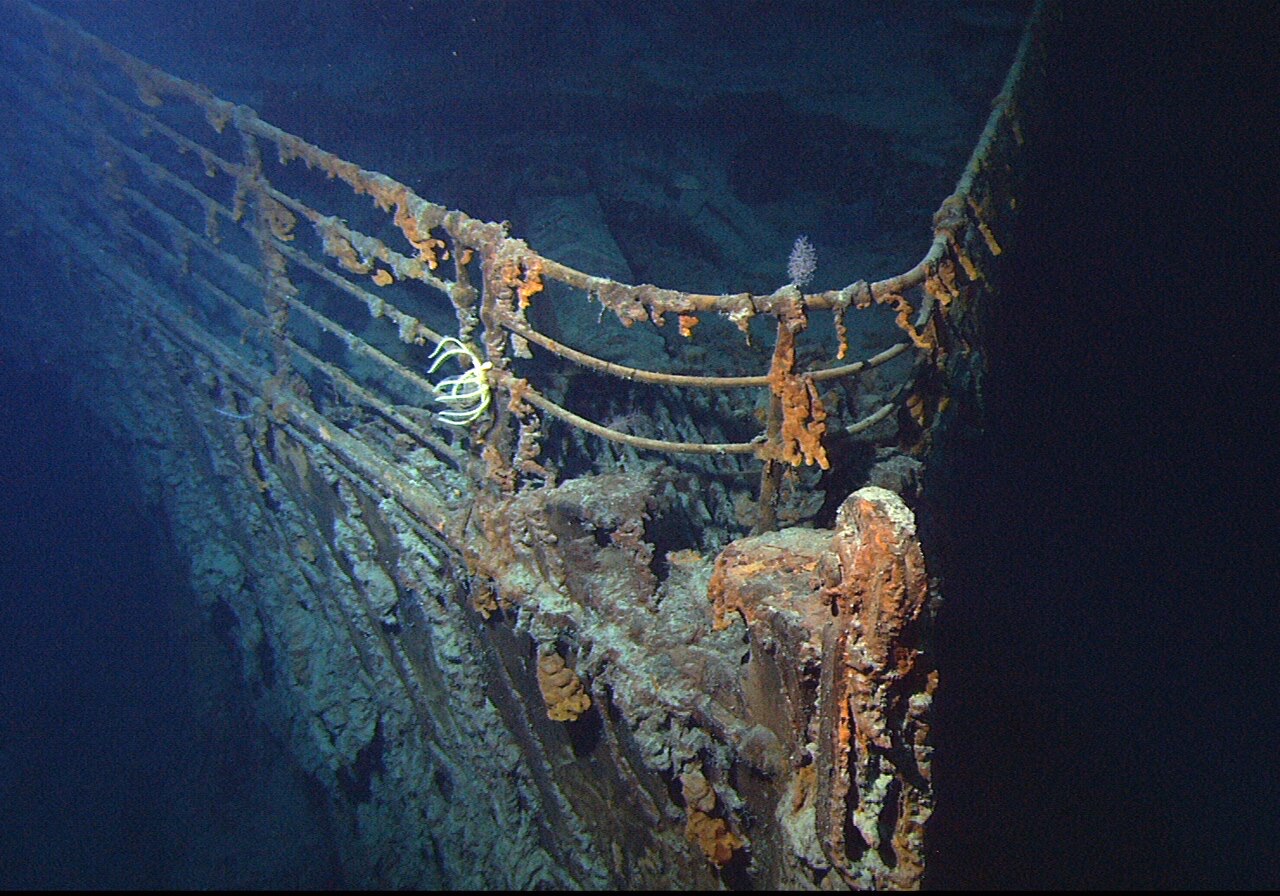
The response: an expedition in the mid-1990s photographed letters of the name on the bow, including an “A”, which “Olympic” does not have. Researchers have found no independent confirmation of the letters Gardiner described.
The differences between the ships
The response: the ships were similar but not identical. The forward part of the Titanic’s upper promenade was enclosed and the Olympic’s open. Where the Olympic had a second promenade on a lower deck, the Titanic had private suites. A steward told the US inquiry that this deck on the Titanic was “all closed in”. Harland and Wolff employed about 15,000 people, and government inspectors recorded details of each hull down to rivets.
The yard number
The response: researchers point to evidence on the seabed. The number 401, the Titanic’s yard number, has been photographed on a propeller blade of the wreck and found on objects recovered from it. Believers answer that the Titanic’s propeller was fitted to the Olympic during its repair. Chirnside writes that the available evidence indicates spare blades were used. “There can be no question that the ship at the bottom of the North Atlantic Ocean is the RMS Titanic,” Layton has said.
What happened to the Olympic afterwards
The Olympic was at sea in April 1912, about 500 miles away, when the Titanic’s distress call came, and steamed towards the scene. It served as a troopship in the First World War and sailed until 1935, when it was sold for scrap.

A separate theory
The switch theory is sometimes merged online with another claim: that Morgan had the ship sunk to kill three wealthy passengers, John Jacob Astor, Benjamin Guggenheim and Isidor Straus, who supposedly opposed the creation of the Federal Reserve. Fact-checkers found no evidence that the three opposed it. Reuters reported that Straus appears to have spoken in favour of the proposal.
What is still argued about
- Why Morgan cancelled his trip.
- How much the coal fire known to have burned in one of the Titanic’s bunkers contributed to the sinking. A 2017 documentary argued that it weakened the hull, and a group of maritime historians disputed that. Gardiner also cited the fire, though it does not by itself say anything about the ship’s identity.
No opinion poll appears to have asked how many people believe the theory.
Sources
- British Wreck Commissioner’s Inquiry, report (1912), numbers saved
- British Wreck Commissioner’s Inquiry, report (1912), findings
- US Senate inquiry, report (1912)
- Mark Chirnside, “Olympic & Titanic - An Analysis of the Robin Gardiner Conspiracy Theory” (2006)
- Mark Chirnside, “FAQ: Was Titanic’s Starboard Propeller Used to Repair Olympic after the Hawke collision?” (2024)
- PolitiFact, “The ship resting at the bottom of the Atlantic is the Titanic, not the Olympic” (2024)
- PolitiFact, “Titanic sinking was an accident that caused over 1,500 deaths, not an inside job to kill three men” (2023)
- Reuters via MarineLink, “Fact Check: J.P. Morgan Did Not Sink The Titanic” (2021)
- Lead Stories, “Fact Check: Sister Ships Titanic And Olympic Were NOT Switched In An Insurance Fraud Scheme” (2024)
- The Skeptic, “The sinking of the Titanic wasn’t a crafty insurance con, it was a real tragedy” (2025)
- National Oceanic and Atmospheric Administration, “R.M.S Titanic - History and Significance”
- Woods Hole Oceanographic Institution, “History of RMS Titanic”
- Lloyd’s, “Lloyd’s and the Titanic”
- Lloyd’s Register Foundation Heritage Centre, “Information on the Titanic”
- Titanic Belfast, “On this day: 1 March 1912”
- Royal Museums Greenwich, “Research guide D2: RMS Titanic: Bibliography”
- Biography.com, “The Wild Conspiracy Theory That the Titanic Never Sank” (2025)
- BBC News, “Titanic: First ever full-sized scans reveal wreck as never seen before” (2023)
- AFP via Space Daily, “The ship sank. Or did it? Titanic misinformation swirls” (2023)
- Titanic Inquiry Project, “Olympic”
- CBS News, “Documentary identifies second culprit in the sinking of the Titanic” (2017)
- TheJournal.ie, “Experts are disputing a documentary which says a fire was partly to blame for the Titanic sinking” (2017)
- The Titanic “Switch” Theory (enthusiast site)