
The short version
“Tartary” is a real name. It appeared on European and American maps from the 13th century to the late 19th century, as a loose label for a vast and poorly known stretch of Asia. Since about 2016 a theory has spread online that Tartaria was in fact a technologically advanced empire that covered much of the world, that its grand buildings survive today under false credits, and that its history was deliberately erased. Critics reply that the buildings are well documented, and that Tartary was never a country.
The real Tartary
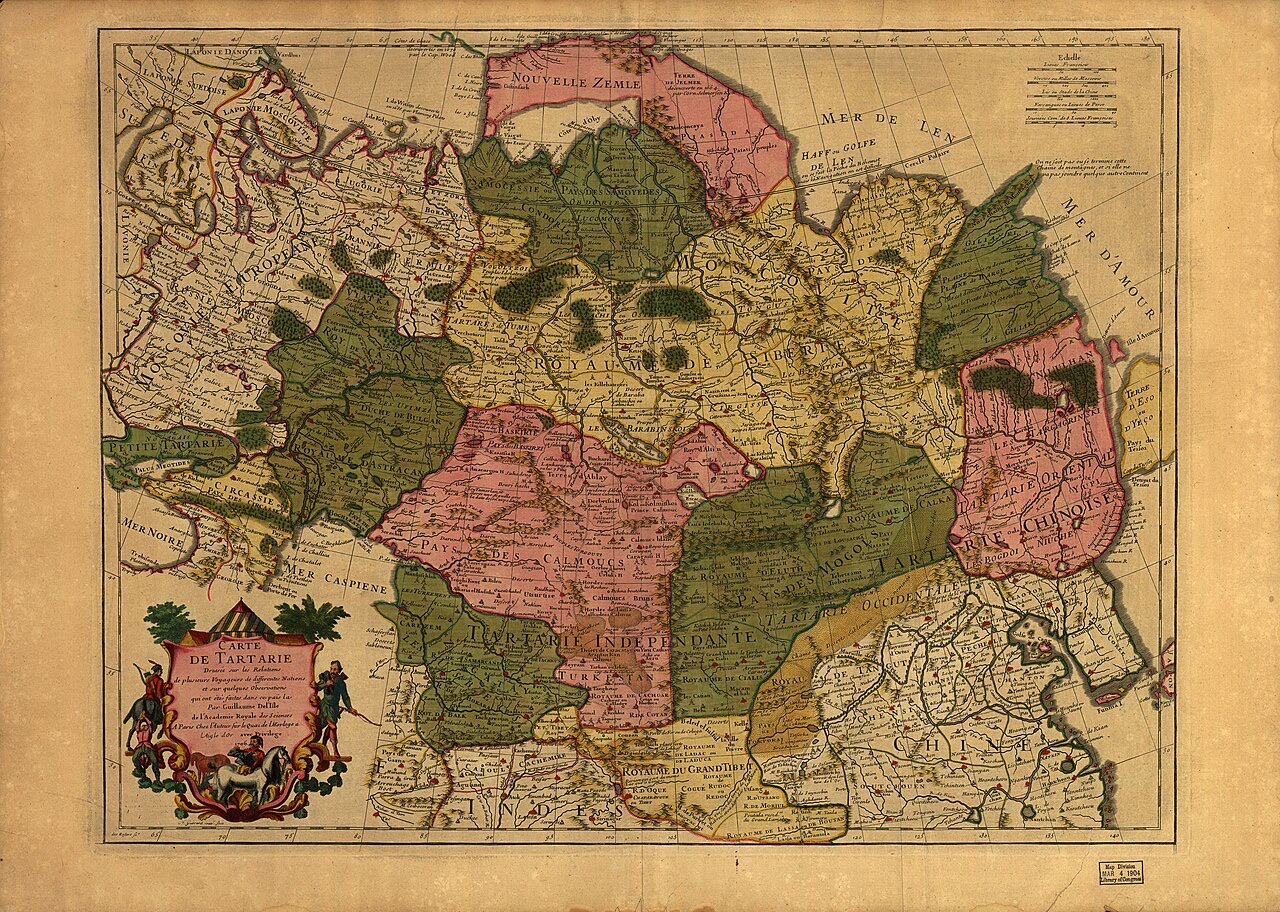
A name for the unknown. The English word comes from the Latin “Tartaria”, the land of the Tartars. The extra “r” came from European writers who mixed up the Tatar peoples with Tartarus, the underworld of Greek myth. According to the Library of Congress, it is highly doubtful that most of the peoples concerned ever called themselves Tartars or their lands Tartaria.
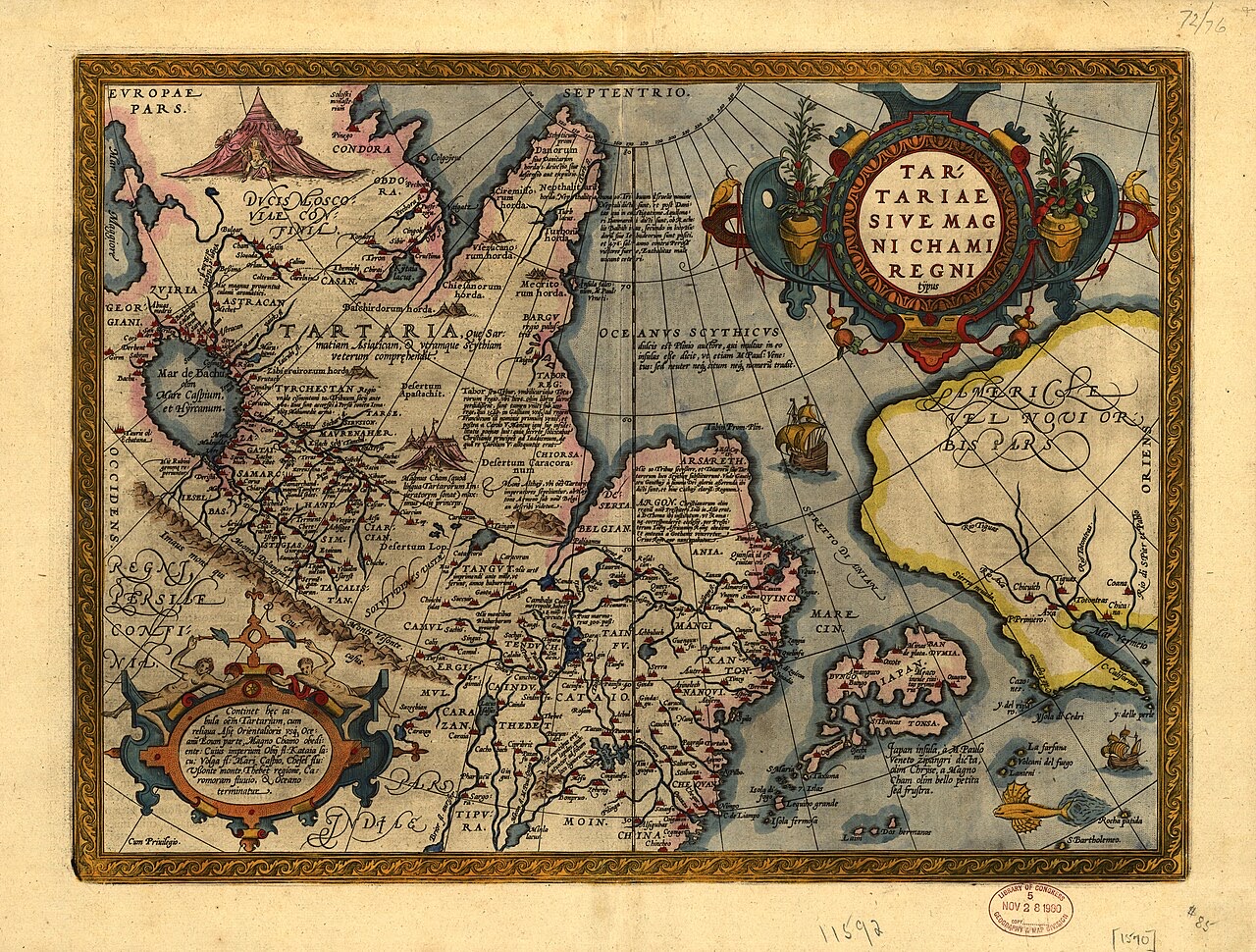
On the maps. Abraham Ortelius’s world atlas of 1570 included a map of “Tartaria or the kingdom of the great Cham”, meaning the Khan, stretching from the Volga to the Pacific. By then the Mongol empire it seemed to describe had been broken up for about 200 years. A map of 1657 spread the name across most of northern and central Asia with no borders at all, which the Library of Congress reads as a sign that Tartaria “was not a political designation”. In the 18th century mapmakers split it into several Tartaries, among them “Chinese”, “Independent” and “Muscovite” Tartary.
In the encyclopedia. The first edition of the Encyclopaedia Britannica, in 1771, described Tartary as “a vast country in the northern parts of Asia”, and went on to list the different peoples living there. It mentions no ruler or government.
Gone from the maps. As Europeans learned more about the region, the name gave way to Siberia, Turkestan, Mongolia and Manchuria. It stayed on some maps until the late 19th century. The Russian Geographical Society, as quoted by the fact-checkers Lead Stories, has said that Tartary “is not a specific state, but a kind of mythologized land that has never had precise borders”, and that maps using the name are easy to find in cartographic collections.
What the theory says
The theory has no single text, and believers pick different parts of it. The common core, as summarised by the writer Zach Mortice in Bloomberg CityLab, is this: a vast, advanced Tartarian civilisation built or influenced cities around the world. It fell, its great buildings were buried, and its history was erased. Afterwards the surviving buildings were credited to the builders named in our history books.
Joachim Skaar, a Norwegian who runs a Tartaria channel on YouTube, put it this way in 2021: “I think that it was one worldwide civilization.” The same people, he said, built the Capitol in Washington and the pyramids in Egypt.
Other parts of the theory:
- The mud flood. A disaster, usually placed in the 1800s, buried the old world. Basement windows below street level are read as buried ground floors.
- Too grand for their time. Ornate 19th-century buildings, from state capitols to post offices, are said to be too elaborate to have been made by hand in the years given. “How many stamps did you sell to build yourself a post office like this?” asked one popular YouTuber.
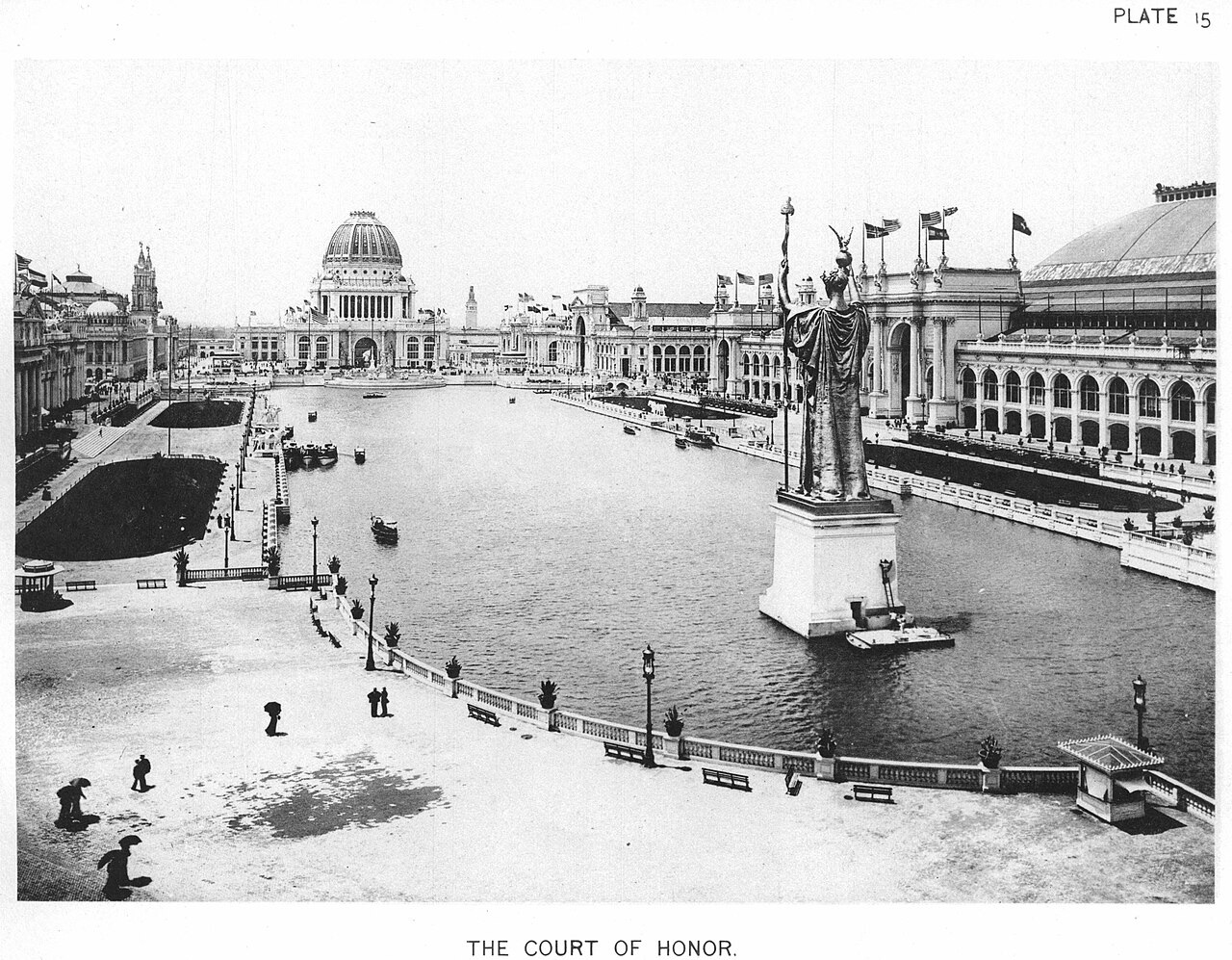
- The world’s fairs. The white palaces of the Chicago fair of 1893 and the San Francisco fair of 1915 are said to have been Tartarian cities, shown off one last time and then demolished.
- Free energy. The empire is said to have drawn energy from the air, and believers point to “aerials” on old roofs. The cover-up is said to be about profiting from electricity that could be free.
- Star forts and giants. Star-shaped forts found from Europe to Sri Lanka are taken as signs of one civilisation. Tall doorways and photographs of very tall people are taken as evidence of giants.
- Orphan trains. One TikTok video claimed that children were sent west on trains to repopulate empty Tartarian cities.
The arguments, point by point
The buildings
Believers say: no one could have built such ornate buildings in the time and with the tools of the 19th century.
The response: the buildings have named architects, dates and records. Mortice gives examples: the Singer Building in New York, completed by the architect Ernest Flagg in 1908 and briefly the tallest building in the world, and the federal buildings designed by Alfred Mullett after the Civil War. A fact-check by Australia’s AAP traced Sydney’s Queen Victoria Building to the city architect George McRae and its statues to a sculptor of the 1890s. Mortice adds that before industrial building, labour was cheap, so carved stonework was not the great expense it would be today.
The mud flood
Believers say: windows below ground level and old photographs of streets being dug up show a buried world.
The response: basement windows let light and air into the rooms below. In many cities the streets themselves were raised. From 1856 Chicago lifted its street level to lay sewers, jacking up buildings by several feet, in places as much as 14 feet. After the great fire of 1889, Seattle raised its streets and sidewalks, which left the old ground floors below the new level and created what is now called the Seattle Underground. The sceptic Brian Dunning recognised at least one supposed mud-flood photograph as a picture of Seattle’s street works.
The world’s fairs
Believers say: cities this grand would not have been built only to be torn down.
The response: they were built to be temporary. The buildings of Chicago’s “White City” were wood frames covered in “staff”, a plaster mixture made to look like stone, and almost all of them were destroyed by fire afterwards. The 1915 palaces in San Francisco were made the same way. One of them, the Palace of Fine Arts by Bernard Maybeck, was kept, decayed, and was rebuilt in permanent materials from the 1960s.
Star forts and giants
Believers say: star forts from Europe to Sri Lanka, and photographs of giants, point to one lost civilisation.
The response: the military historian Jeremy Black says star forts spread because Europeans carried the design with them. Sri Lanka was a Portuguese and Dutch colony. Many of the photographs of giants show Robert Wadlow, the tallest person on record, who was born in 1918, after the supposed flood.
The CIA document
Believers say: a declassified CIA file proves that Tartaria’s history was rewritten.
The response: the file is real. It is a 1957 CIA paper called “National Cultural Development Under Communism”, about the Soviet treatment of Muslim peoples. It quotes a 1944 order from the Soviet Communist Party to revise “the history of Tartaria”, meaning the Tatar region of the Soviet Union. The paper’s point is that Soviet historians rewrote local histories to put Russia in a good light.
Orphan trains
Believers say: the orphan trains repopulated cities emptied by the disaster.
The response: the orphan trains were real, and served another purpose. According to the National Orphan Train Complex, an estimated 250,000 orphaned, abandoned or homeless children were sent by train to rural communities between 1854 and 1929, in a movement begun by the Children’s Aid Society in New York.

Where it came from
The sceptic Brian Dunning traced the first mud-flood videos on YouTube to August 2016. Interest in English rose sharply at the end of 2018, after an influential post on the forum stolenhistory.org. Writers who have traced the idea say it grew out of Russian pseudo-history: the “New Chronology” of the Moscow mathematician Anatoly Fomenko, which compresses world history, and the writings of the Russian occult author Nikolai Levashov, who presented “Tartaria” as Russia’s true name. The historian Charles Halperin writes that Fomenko’s work has drawn a heated response from professional historians.
The following is small but growing. In October 2024 the Tartaria forum on Reddit had 51,000 members, six times as many as in 2021. In 2023 videos tagged with the name had been viewed almost 300 million times on TikTok. No poll appears to have asked how many people believe it.
Why it appeals
Mortice argues that, without the mud flood and the giants, the theory is a kind of moral judgement on architecture: traditional styles are good, and modern ones are the product of a decline. He grants it one point. Modern architecture really did replace the old styles in a very short time. Mortice and others have also noted that some Tartaria forums and videos carry other conspiracy theories, including antisemitic ones. Mortice adds that not everyone who takes part appears to be a true believer.

What is still argued about
- How seriously most followers take it. Mortice has described it, for most, as “more like fun, freaky thought exercise” and a statement of taste.
- Who first joined the pieces together, and when. The sources trace it to Russian writers and to forums and videos from 2016 on.
Sources
- Library of Congress, “Tracking ‘Tartary’ on Western Maps” (2025)
- Encyclopaedia Britannica, first edition, “TARTARY” (1771), transcription
- Zach Mortice, “Inside the ‘Tartarian Empire,’ the QAnon of Architecture”, Bloomberg CityLab (2021), author’s copy
- Zach Mortice, “The Tartarian Candidate”, Bloomberg CityLab (2024), author’s copy
- Skeptoid, “Tartaria and the Mud Flood” (2021)
- Lead Stories, “Fact Check: NO Evidence Of Old ‘Tartarian Empire’ Or Of ‘Mud Flood’ Resetting Society” (2023)
- Lead Stories, “Fact Check: Declassified 1957 CIA File Mentioning ‘Tartar History’ Does NOT Vindicate Tartarian Empire Conspiracy Theory” (2024)
- AAP FactCheck, “Ancient empire’s link to historic buildings is a delusion” (2024)
- The Spinoff, “Inside the wild architecture conspiracy theory gaining traction online” (2022)
- Global Network on Extremism and Technology, “The Dangers of Pseudohistorical Conspiracy Theories” (2023)
- Charles Halperin, “False Identity and Multiple Identities in Russian History: The Mongol Empire and Ivan the Terrible”, The Carl Beck Papers (2011)
- WBEZ Chicago, “Raising Chicago”
- HistoryLink, “The Great Seattle Fire, Part 2” (2020)
- HistoryLink, “Seattle – Thumbnail History”
- Newberry Library, “1893: Chicago and the World’s Columbian Exposition”
- SAH Archipedia, “Palace of Fine Arts”
- US National Park Service, “Legacy of the Panama-Pacific International Exposition”
- National Orphan Train Complex, “History”
- All That’s Interesting, “The Jaw-Dropping Tartaria Theory Explained” (2026)