
The short version
On the morning of 7 December 1941, Japanese aircraft attacked the US Pacific Fleet at Pearl Harbor in Hawaii, bringing the United States into the Second World War. American codebreakers had been reading Japan’s secret diplomatic messages for more than a year, and Washington knew war was close. Ever since, some have argued that President Franklin D. Roosevelt knew the attack was coming and let it happen, to unite a reluctant nation behind a war he wanted. The two commanders in Hawaii, Admiral Husband Kimmel and General Walter Short, were blamed and removed. Nine investigations followed, according to a 1995 Defense Department review. The congressional inquiry of 1946 found no evidence that Roosevelt had tricked or provoked Japan into attacking, and most historians conclude that Washington expected a strike, but not at Pearl Harbor.
The attack
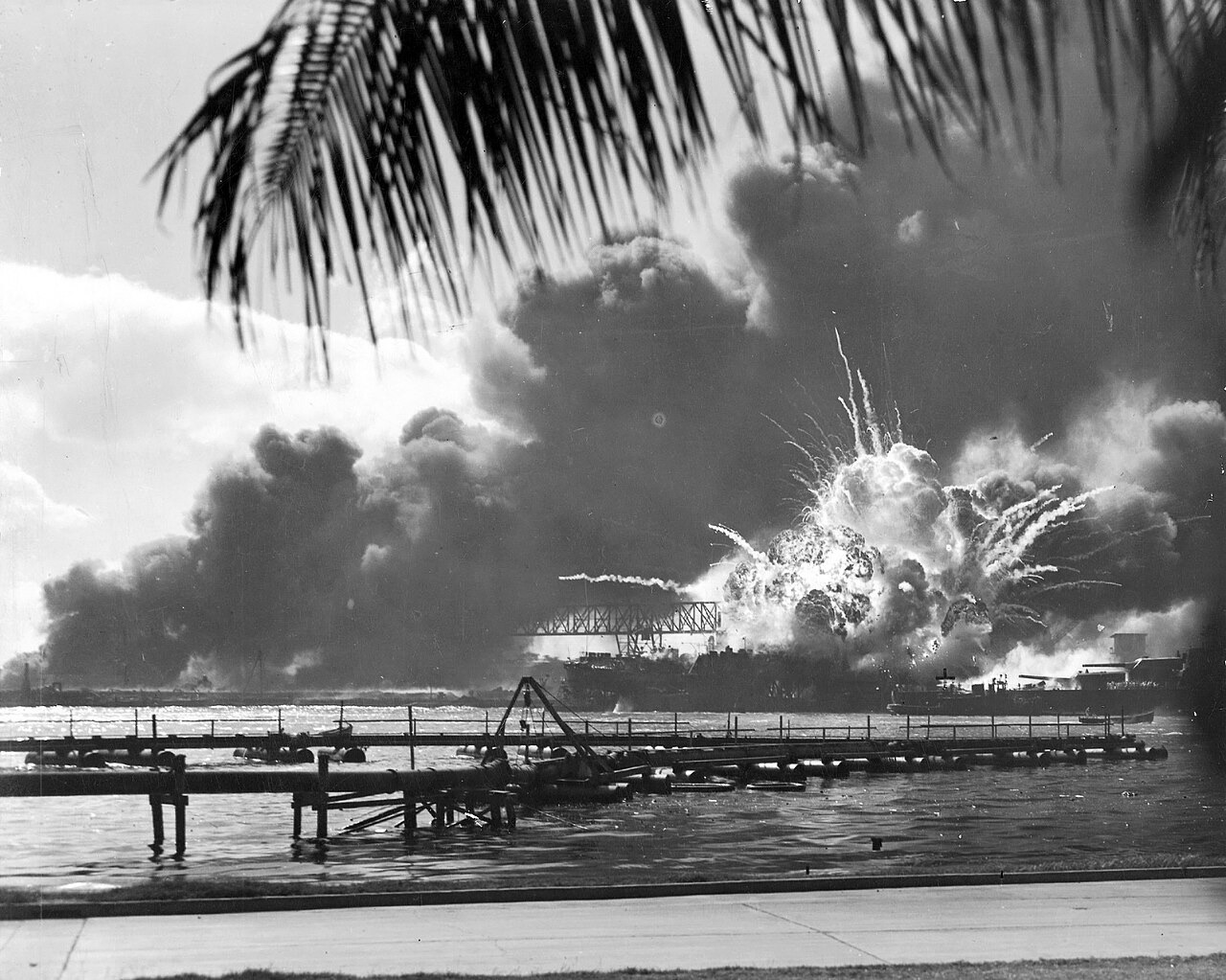
The first wave of Japanese aircraft struck at 7.55 am, Hawaii time. More than 350 planes took part in two waves. By 10 am, 21 ships had been sunk or damaged. The Arizona and the Oklahoma were total losses. Navy, Army and Marine losses came to 2,335 killed, and 68 civilians died.
What Washington knew
MAGIC. American codebreakers had broken Japan’s top diplomatic cipher machine, known as Purple, and the decoded messages were distributed under the code name MAGIC. They showed hostile intent and Japanese interest in the location of US warships. But, as the NSA historian Frederick Parker wrote, they “contained no Japanese naval or military information” and did not reveal the movements of the Japanese fleet.
The navy code. The Japanese navy’s main operational code, JN-25, was not being read. US stations intercepted more than 26,000 Japanese naval messages between September and early December 1941, but none of the naval systems was being read at the time. The strike force sailed under strict radio silence.
The “bomb plot” message. On 24 September 1941 Tokyo asked its consulate in Honolulu to report the exact positions of ships in Pearl Harbor, dividing the harbour into five areas. The message was decoded and translated by 9 October. The 1946 congressional committee did not accept that it was a “bomb plot”, but said it should have been passed on to the commander of the Pacific Fleet.
The warnings. On 27 November the Navy sent Kimmel a message that began: “This dispatch is to be considered a war warning.” It expected an aggressive move by Japan within days, but against the Philippines, Thailand, the Kra Peninsula or possibly Borneo, not Hawaii. The Army’s message to Short said: “hostile action possible at any moment” and that the United States wanted Japan to “commit the first overt act”. Short replied that he had put his command on alert against sabotage. On 2 December Kimmel learned that four Japanese aircraft carriers could not be located.
The last message. On the evening of 6 December Roosevelt read 13 parts of a long message from Tokyo to its envoys in Washington and reportedly said it meant war. The final part, read the next morning, broke off negotiations but did not declare war. The Army’s chief of staff, General George Marshall, sent a final warning to Hawaii, but it went by commercial telegraph and reached the Army signal office at Fort Shafter hours after the attack.
The investigations
Two officers took most of the blame. Kimmel and Short were relieved of their commands on 16 December 1941. A commission led by Supreme Court Justice Owen Roberts found that each had committed a “dereliction of duty” by failing to confer with the other about the warnings. In 1944 the Army Pearl Harbor Board also criticised officials in Washington, including Marshall and the Secretary of State.
The Joint Congressional Committee reported in 1946. Its majority found “no evidence” that Roosevelt or his cabinet had “tricked, provoked, incited, cajoled, or coerced Japan” into attacking, and judged the Hawaii commanders guilty of “errors of judgment and not derelictions of duty”. Two senators, Homer Ferguson and Owen Brewster, wrote a minority report placing the blame on Roosevelt and senior officials in Washington as well as on Kimmel and Short. They wrote that by late November Roosevelt and his secretary of state had concluded that a Japanese attack within days was “so highly probable as to constitute a certainty”. They did not claim that Roosevelt knew Pearl Harbor was the target.

The arguments, point by point
Roosevelt wanted war
Those who say he knew argue: Roosevelt wanted to bring the United States into the war to help Britain, and needed an attack to unite the country. The historian Charles Beard made this case in 1948. Believers point to a 1940 memo by a naval intelligence officer, Arthur McCollum, which proposed eight measures against Japan and said: “If by these means Japan could be led to commit an overt act of war, so much the better.” On 25 November 1941 the Secretary of War, Henry Stimson, wrote in his diary: “The question was how we should maneuver them into the position of firing the first shot without allowing too much danger to ourselves.”
The response: the cryptology historian David Kahn notes that Stinnett himself admits he has no record that Roosevelt ever saw the McCollum memo. The historian R.J.C. Butow argues that Washington expected Japan to strike in Southeast Asia, not at Pearl Harbor, and that “human error—not conspiracy” explains the failure.
The secrets were kept from Hawaii
Those who say he knew argue: the most important decoded messages were withheld from Kimmel and Short. William Friedman, the Army’s leading codebreaker, wrote in 1957 that “there can be no question whatever about this fact”, and said he now thought the minority senators had come “closer to the truth”.
The response: Friedman put the withholding down to fear of revealing the codebreaking secret, not to a plot. Kahn writes that no Japanese agency ever radioed a message mentioning an attack on Pearl Harbor by name. Such messages were carried by hand.
The fleet broke radio silence
Those who say he knew argue: Robert Stinnett’s book Day of Deceit claims that the Japanese strike force did not keep radio silence, so that the US could have tracked it, and that decoded messages reached the President.
The response: Kahn notes that Japanese commanders and radio operators said unanimously that they sent no messages. Philip Jacobsen, a retired Navy cryptologic officer, says official records show that not a single JN-25 message was decoded before the attack. Kahn wrote that Stinnett “misreads the record, misunderstands intelligence, mishandles facts, and misdirects readers.”
Signals and noise
Most historians follow a different explanation. In Pearl Harbor: Warning and Decision, which won the Bancroft Prize in 1963, Roberta Wohlstetter argued that the warning signs were lost among a mass of irrelevant information. “There is not a shred of evidence that President Roosevelt knew about an attack on Pearl Harbor,” says Rob Citino of the National WWII Museum.
The commanders’ families
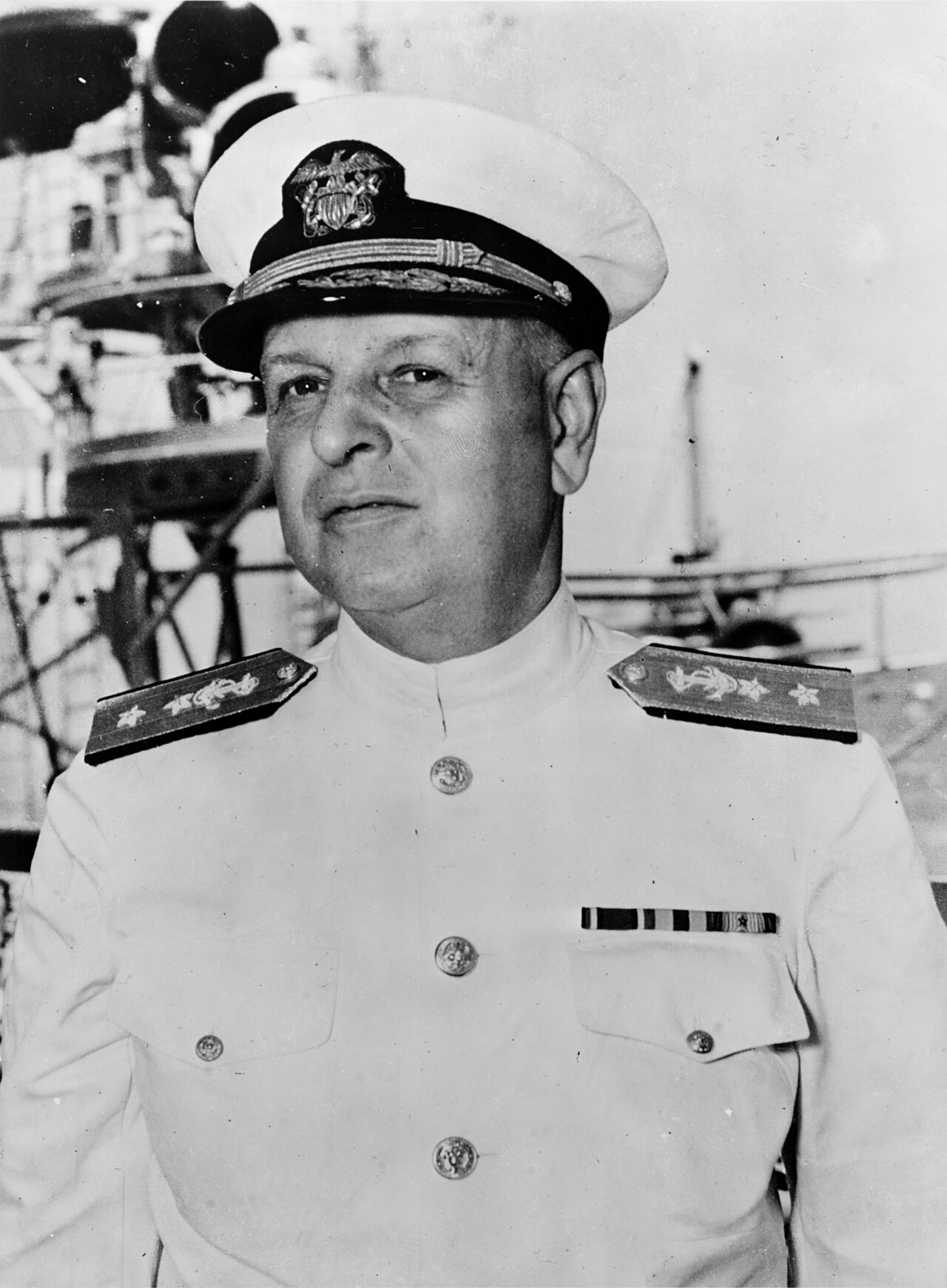
In 1995 a Defense Department review found that responsibility “should be broadly shared”, though it also said the two commanders had enough information to justify more vigilance, and it recommended against advancing them in rank. In 1999 the Senate voted 52 to 47 to ask the President to advance Kimmel and Short posthumously to higher ranks on the retired list. In 2000 Congress included the request in law, stating that they had served competently and that the losses were not the result of dereliction of duty. No source shows that any President has acted on the request, and in 2013 Kimmel’s family was still campaigning.

What is still argued about
- Whether Washington should have foreseen an attack on Pearl Harbor.
- Why key intelligence was not shared with the Hawaii commanders.
- How much blame Kimmel and Short deserve.
In a Gallup poll on the 50th anniversary in 1991, 31% of Americans agreed that Roosevelt knew about Japan’s plans to bomb Pearl Harbor and did nothing, 47% disagreed and 22% had no opinion.
Sources
- Naval History and Heritage Command, “Fact Sheet: Pearl Harbor: Aftermath”
- National Park Service, Pearl Harbor National Memorial, “Military Casualties”
- Frederick D. Parker, Pearl Harbor Revisited: United States Navy Communications Intelligence 1924-1941 (NSA, 1994), part 3
- Frederick D. Parker, Pearl Harbor Revisited, part 4
- Frederick D. Parker, Pearl Harbor Revisited, part 5
- R.J.C. Butow, “How Roosevelt Attacked Japan at Pearl Harbor: Myth Masquerading as History”, Prologue, National Archives (1996)
- William F. Friedman, Certain Aspects of MAGIC (SRH-125, 1957), chapter 4, HyperWar
- William F. Friedman, Certain Aspects of MAGIC (SRH-125, 1957), chapter 7, HyperWar
- Joint Committee on the Investigation of the Pearl Harbor Attack, Report (Senate Document 244, 1946), Internet Archive
- HyperWar, “War Warning Message” (November 1941)
- Edwin Dorn, “Advancement of Rear Admiral Kimmel and Major General Short” (Dorn Report, 1995)
- Public Law 106-398 (2000), section 546
- Congressional Record, “Admiral Kimmel and General Short” (1999)
- Honolulu Star-Bulletin, Senate vote on Kimmel and Short (1999)
- CBS Philadelphia, “As Pearl Harbor Day Approaches, A Family’s Quest To Correct History Continues” (2013)
- David Kahn, “Did FDR Invite the Pearl Harbor Attack?”, New York Review of Books (1982)
- David Kahn, “Did Roosevelt Know?”, New York Review of Books (2000)
- Philip H. Jacobsen, review of Day of Deceit, US Naval Cryptologic Veterans Association
- Historynet, “Book Review: Day of Deceit”
- RAND, “Roberta Wohlstetter: A Military Analyst Ahead of Her Time” (2019)
- NPR, transcript with Rob Citino of the National WWII Museum (2016)
- Gallup, “Americans Say Sept. 11 Will Be More Historically Significant Than Pearl Harbor” (2001)