

The short version
The accepted account is that Hitler and Eva Braun killed themselves in the bunker under the Reich Chancellery in Berlin on the afternoon of 30 April 1945, and that their bodies were burned in the garden above. Several people who were in the bunker described it. Soviet forces recovered the remains in May and identified Hitler from his teeth, but kept it secret. Instead Stalin told American leaders he believed Hitler was alive, perhaps in Spain or Argentina. That planted a story that has never gone away, and in recent years books and television series have argued that Hitler escaped to Argentina. Historians, and a French forensic study of the teeth in 2018, say he died in Berlin in 1945.
The last day in the bunker
According to the witnesses’ accounts gathered by the US National Archives, Martin Bormann told Hitler’s SS adjutant, Otto Günsche, after lunch on 30 April that Hitler and Braun would end their lives that day and that their bodies were to be burned. Petrol was brought to the bunker’s emergency exit. At about 3.15 pm Hitler and Braun said their last goodbyes to the staff. Hitler told his valet, Heinz Linge, that he was going to shoot himself.
Shortly after 4 pm both were dead. Braun had taken cyanide. Their bodies were carried up to the garden, doused in petrol and set alight, and the remains were later put in a shell crater and covered with earth. The National Archives notes that the accounts given years later by some of the participants contradict each other about what happened afterwards that night.
Hitler’s pilot, Hans Baur, said he offered that same day to fly Hitler out, to Argentina, Japan or elsewhere, and that Hitler refused.
What the Soviets found and hid
Soviet forces dug up the remains outside the bunker in early May 1945. The jaw and dental bridgework were taken to Moscow. Käthe Heusermann, assistant to Hitler’s dentist, identified the teeth and led the Soviets to his dental X-rays. She was then held in solitary confinement in Moscow for six years without trial and sentenced to ten years in a labour camp.
Stalin was told, but according to the Soviet interpreter Elena Rzhevskaya he ordered: “We shall not make this public. The capitalist encirclement continues.”
Linge and Günsche were captured and interrogated in Moscow for four years. The resulting report, presented to Stalin in 1949 and published in 2005, concluded that Hitler shot himself shortly before 4 pm on 30 April.
In 1946 the remains were secretly buried at a Soviet military base in Magdeburg. In 1970, on the order of the KGB chief Yuri Andropov, they were dug up, burned, and the ashes thrown into a river, apparently so that the grave could not become a shrine. Only the jaw and a fragment of skull with a bullet hole, found at the bunker in 1946, survive in Moscow archives.
How the escape story began
On 6 June 1945, while Soviet officers in Berlin were telling Eisenhower’s staff that Hitler’s body had been found, Stalin told American envoys in Moscow that he was sure Hitler was still alive. Three days later Marshal Georgy Zhukov told reporters that no body identifiable as Hitler’s had been found. At the Potsdam conference in July, Stalin told President Truman’s party that Hitler might be in Spain or Argentina. Rumours during 1945 placed him in Argentina, Chile, Japan, Spain and Sweden.
Why Stalin did this is not known. A 2007 article in The Spectator argued that a living Hitler was more useful to him than a dead one. A 2018 report on the Soviet interpreter’s memories notes that historians have had to guess at his purpose.
The uncertainty reached the public. In a Gallup poll in September 1945, only 16 per cent of Americans said they believed Hitler was dead. In 1947, 45 per cent still believed he was alive.
The British investigation
In 1945 British intelligence asked the Oxford historian Hugh Trevor-Roper, then serving as an intelligence officer, to find out what had happened. Without help from the Soviets, but able to ask British and American agencies to make enquiries, he in less than two months reported that there was no evidence that Hitler was still alive. His book The Last Days of Hitler was published in 1947 and has never been out of print.

The arguments, point by point
The submarines
Believers say: Hitler was taken to Argentina by U-boat.
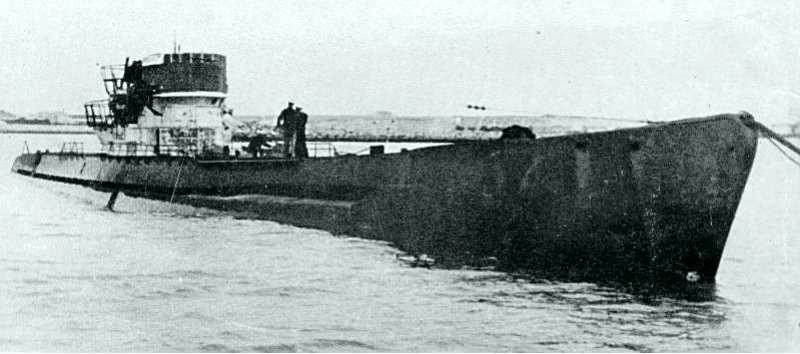
The response: two German submarines did surrender in Argentina after the war: U-530 on 10 July 1945 and U-977 on 17 August, after a long submerged voyage from Norway. Their arrival fed the rumours. The Argentine navy stated at the time that no Nazi leader had been aboard U-530 and that it had landed no one.
The FBI files
Believers say: FBI files show the Bureau received reports that Hitler had arrived in Argentina.
The response: it did. The files contain letters, clippings and second- and third-hand reports, including one informant’s claim to have met Hitler landing from submarines. The reporter who passed it on could not find the man again. The files show the FBI followed up leads that ended nowhere, and nothing in them shows that Hitler was alive.
The skull is a woman’s
Believers say: in 2009 the University of Connecticut archaeologist Nick Bellantoni, testing the Moscow skull fragment for a History Channel programme, found that it came from a woman under 40.
The response: Russia’s security service rejected the result. The test was on the skull fragment only, not on the jaw and teeth. The historian Christopher Browning said at the time that the consensus on Hitler’s death did not depend on the skull.
The teeth
In 2018 a French team led by the forensic scientist Philippe Charlier became the first researchers from outside Russia allowed to examine the teeth. Comparing them with Soviet autopsy reports, American dental X-rays and records, they concluded that the teeth were Hitler’s. “The teeth are authentic — there is no possible doubt … Our study proves that Hitler died in 1945,” Charlier said. There was not enough material to extract DNA. A 2026 review in the Journal of Craniofacial Surgery summarised the chain of identification, ending with this study.
Grey Wolf and Hunting Hitler
Believers say: the 2011 book Grey Wolf by Simon Dunstan and Gerrard Williams argues that Hitler and Braun were flown out of Germany, lived in Patagonia, had two daughters, and that Hitler died in 1962. Williams has said there is no forensic evidence of their deaths. The History Channel series Hunting Hitler, which began in 2015 and was led by the former CIA officer Bob Baer, drew on FBI files about reported sightings.
The response: an Argentine journalist, Abel Basti, accused the book’s authors of using his research, which Williams denied. The historian Guy Walters called the Argentina claims “2000% rubbish”. The historian Richard Evans, who examined the escape theories in his 2020 book The Hitler Conspiracies, noted that more book-length arguments for Hitler in Argentina had appeared in the 21st century than in the previous 55 years. A review of the book summed up its answer to whether Hitler escaped: “Absolutely not.”
What is still argued about
- The details of what happened in the bunker garden after the burning, where witnesses’ later accounts conflict.
- Whose skull fragment is held in Moscow.
- What Stalin intended by his claims in 1945.
Sources
- US National Archives, “Hunting Hitler Part IV: The Bunker (Afternoon, April 30)” (2015)
- US National Archives, “Hunting Hitler Part V: The Garden (Evening, April 30)” (2015)
- US National Archives, “Hunting Hitler Part VII: The Search Continues, June-September 1945” (2015)
- Fox News (from the New York Post), “How the woman who identified Hitler’s dental remains ended up in prison” (2018)
- The Irish Times, “Hitler: the lost files” (2005)
- History News Network, “Official: KGB chief ordered Hitler’s remains destroyed” (2009)
- Deseret News (AP), “Hitler’s remains were burned by Soviets in ’70, report says” (1995)
- Deseret News, “Did bone belong to Hitler?” (2000)
- The Spectator, “The Last Days of Hitler revisited” (2007)
- Roper Center, Cornell University, “The Truth (about Americans’ Belief in Conspiracy Theories) Is Out There”
- uboat.net, “U-530”
- uboat.net, “U-977”
- Time, “ARGENTINA: U-530” (1945)
- Snopes, “Do FBI Files Prove Adolf Hitler Escaped to Argentina?” (2016)
- UConn Today, “Premiere of New History Channel Series Features UConn Faculty” (2009)
- Taipei Times, “Tests raise doubts about Hitler’s end” (2009)
- ABC News, “DNA Test Sparks Controversy Over Hitler’s Remains” (2009)
- NPR, “French Researchers: Hitler Really Did Die In The Bunker In 1945” (2018)
- IFLScience, “Study Of Hitler’s Teeth Dispels Conspiracy Theories About His Death” (2018)
- Université de Versailles Saint-Quentin, “Des dents conservées à Moscou sont bien celles d’Adolf Hitler, mort en 1945” (2018)
- MercoPress, “New book claims ‘overwhelming evidence’ shows Hitler ended his days in Argentina” (2011)
- NZ Herald (from The Independent), “Hitler escape book sparks fresh row” (2013)
- Variety, review of “Hunting Hitler” (2015)
- Business Standard, “Fake history”, review of Richard Evans, The Hitler Conspiracies (2021)
- Times Higher Education, review of Richard Evans, The Hitler Conspiracies (2020)
- Philippe Charlier and others, “The remains of Adolf Hitler: A biomedical analysis and definitive identification”, European Journal of Internal Medicine (2018)
- AFP via Phys.org, “Hitler’s skull belonged to a woman, scientists say” (2009)
- Fiorillo, Maiorana and Cicciù, review in the Journal of Craniofacial Surgery (2026), PubMed record