
The short version
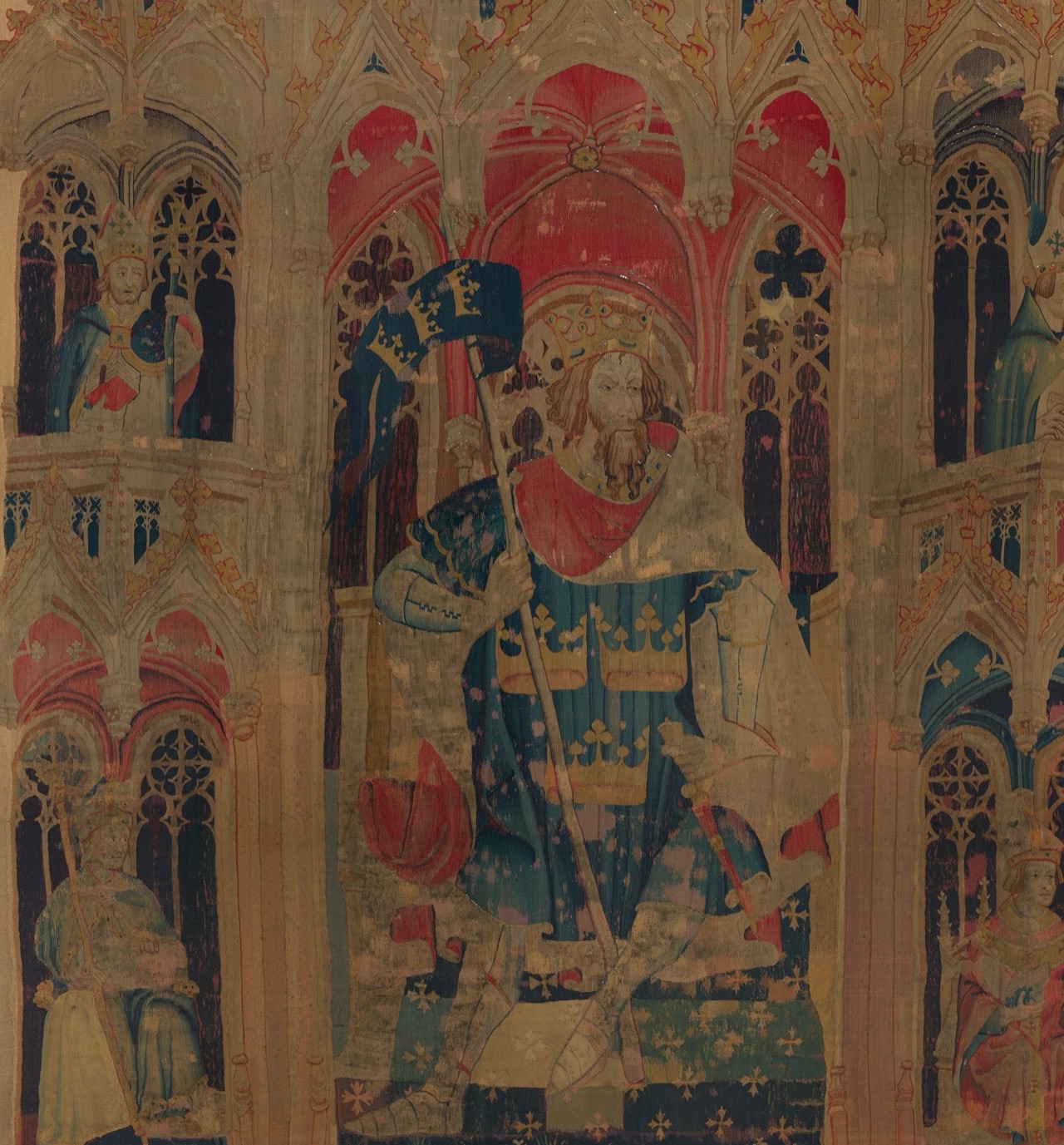
Nobody argues that the Arthur of the stories, with his knights, Camelot and the Holy Grail, was real. Those parts were added by writers between the 12th and 15th centuries. The question is whether there was a real man behind them: a British war leader who fought the Saxons after the Romans left Britain, around the year 500. The earliest sources are thin, late and hard to date. Some historians conclude there is no historical evidence for Arthur at all. Others think he probably existed, though he would have looked nothing like the legend. A review of current opinion in 2026 found no consensus.
What the earliest sources say
Gildas. The only British writer from close to the time is the monk Gildas, writing around the 530s or 540s. He describes a great British victory over the Saxons at the siege of Mount Badon, and names a British leader, Ambrosius Aurelianus. He never mentions Arthur.
Y Gododdin. A Welsh poem about warriors who died in battle around 600 praises one of them, saying he fought bravely, “although he was not Arthur”. Some scholars take this as a sign that Arthur was already famous. But the poem survives only in a 13th-century manuscript, and the Arthur line may date from no earlier than the 9th century.
The History of the Britons. The first clearly datable source to name Arthur is the Historia Brittonum, written around 829 or 830 and traditionally credited to a monk called Nennius. It calls Arthur not a king but a dux bellorum, “leader of battles”, and lists twelve battles he won, the last at Badon, where 960 men are said to have fallen to his single charge.
The Welsh Annals. The Annales Cambriae, probably compiled in the mid-10th century, have two entries. One records the battle of Badon, about 516 or 518, at which Arthur carried the cross of Christ on his shoulders for three days and nights. The other records the battle of Camlann, about 537, “in which Arthur and Medraut fell”. The years are modern conversions.
How the legend was made
Around 1136 to 1138, Geoffrey of Monmouth wrote the History of the Kings of Britain. He turned the war leader into a conquering king with a full life story, brought in Merlin, and placed Arthur’s conception at Tintagel in Cornwall. The book was a sensation: more than 200 manuscripts survive. French writers, above all Chrétien de Troyes, added the Holy Grail and the love of Lancelot and Guinevere. In 1485 William Caxton printed Thomas Malory’s Le Morte Darthur, written in prison, which became the classic English version.
Doubts are almost as old. In 1534 the historian Polydore Vergil pointed out that if Arthur had conquered half of Europe, some European chronicler would surely have mentioned it.
The places
Glastonbury. In 1191 the monks of Glastonbury Abbey announced that they had found the grave of Arthur and Guinevere, with a lead cross naming him. The abbey had been destroyed by fire in 1184, and sceptics have long argued that the find was staged to raise money. Historians now regard the cross as a likely forgery, and it has since been lost. Excavations led by Roberta Gilchrist found that a 1960s claim to have located the original grave rested on what was merely a pit in a cemetery, though they also found the first definite proof that the abbey site was occupied in the 5th century.
Tintagel. Excavations at Tintagel have found that it was an important, probably royal, settlement between about 450 and 650, with tableware from Turkey and glass from Spain. In 1998 a slate inscribed with the name “Artognou” was found there, and some took it as a reference to Arthur. English Heritage now says the similarity is not significant, since many British names began with “Arto-”.
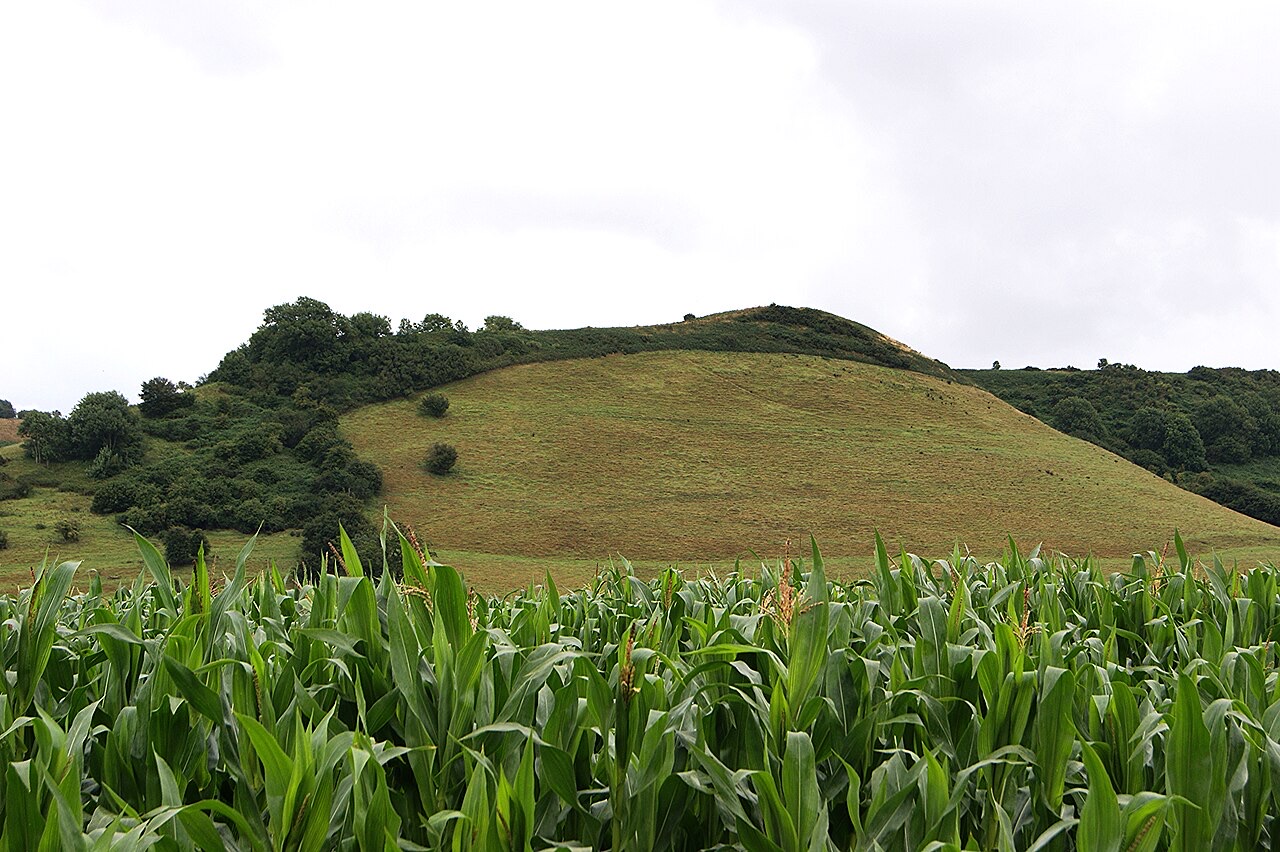
Cadbury Castle. In 1542 the antiquary John Leland identified this Iron Age hillfort in Somerset with Camelot. Excavations by Leslie Alcock in 1966-70 and 1973 found a large timber hall and pottery from the eastern Mediterranean of the 5th or 6th century, evidence of a powerful ruler after the Romans. Nothing found there names him.


The candidates
Riothamus. The 6th-century historian Jordanes records a British king, Riotimus, who answered a call for help from the Roman emperor Anthemius, crossed to Gaul with 12,000 men and was defeated by the Visigoths. The writer Geoffrey Ashe argued that “Riothamus” was a title rather than a name, and that he was the original of Arthur’s campaign in Gaul. Ashe noted that Riothamus was last seen heading towards a town in Burgundy called Avallon, which he admitted “seems almost too good to be true”. The historian Nicholas Higham calls the identification an act of desperation and says Riothamus was probably Breton.
Lucius Artorius Castus. A Roman officer of this name served with a legion based at York and is recorded on two inscriptions found in Croatia. His story inspired the 2004 film King Arthur. But the inscriptions are unlikely to be later than about the year 200, some 300 years before Badon.
The name. The name Arthur probably comes from the Roman family name Artorius. Several royal children in Ireland and Britain were given the name in the 6th and 7th centuries, which some historians take as evidence of a famous earlier Arthur.
The arguments, point by point
For a real Arthur
- A Welsh poem about warriors who died around 600 uses him as a byword for bravery, which some scholars read as a sign that he was already famous when it was first composed.
- Several children of rulers were named Arthur soon after his supposed time.
- The archaeologist Ken Dark notes that the Welsh Annals’ entry for Camlann mentions a plague, which fits a real epidemic of the 530s. “In all probability, a historical Arthur did exist, but we can’t absolutely say that he did,” he said in 2026.
- The historian Bernard Mees argues from archaic spelling that the two Arthur entries in the Welsh Annals were first written in the 6th century.
Against
- Gildas, the only writer close to the time, does not mention him.
- The first clear reference comes about 300 years after the events.
- “There is no historical evidence about Arthur; we must reject him from our histories and, above all, from the titles of our books,” the historian David Dumville wrote in 1977.
- Higham concludes that the tradition “rests on what must be judged a ninth-century fiction”.
- “Personally I don’t think Arthur existed, as he is not named in any early source material,” says Helen Fulton of the University of Bristol.
In between
The historian Guy Halsall argues that the sources cannot settle the question either way. A Bristol colleague of Fulton’s suggests that Arthur may have been a historical figure who gathered myths, or a figure of myth who gathered history. And even those who think there was a real Arthur agree that no leader of the 5th, 6th or 7th centuries would have looked anything like the Arthur of legend.

What is still argued about
- Whether the earliest Arthur references are as old as they claim.
- Whether Badon was Arthur’s battle or someone else’s.
- Whether a real person lies behind the name at all.
In a 2008 poll of about 3,000 young Britons for the television channel UKTV Gold, 65 per cent said they believed Arthur was real.
Sources
- Amgueddfa Cymru - Museum Wales, “Who was King Arthur?”
- Fordham University, Medieval Sourcebook, Gildas, De Excidio Britanniae
- Fordham University, Medieval Sourcebook, Nennius, Historia Brittonum
- Fordham University, Medieval Sourcebook, The Annales Cambriae
- Siân Echard, University of British Columbia, “Y Gododdin”
- Tom Shippey, “So much smoke”, review of Nicholas Higham, King Arthur: The Making of the Legend, London Review of Books (2018)
- Live Science, “Did King Arthur really exist?” (2026)
- University of Reading, Glastonbury Abbey Archaeology, “Arthurian Myth”
- University of Reading, Glastonbury Abbey Archaeology, “Myths”
- Archaeology Magazine, “Legends of Glastonbury Abbey” (2016)
- Oliver D. Harris, “The Lead Cross from Glastonbury Abbey”, Arthurian Literature (2018)
- English Heritage, “History of Tintagel Castle”
- English Heritage, “Research on Tintagel Castle”
- English Heritage, report on the Tintagel excavations (2017)
- Archaeology Magazine, “King Arthur was Real?” (1998)
- University of Oxford, Atlas of Hillforts, “Cadbury Castle”
- Geoffrey Ashe, “Geoffrey Ashe on Riothamus”
- Celtic Literature Collective, “Riothamus in Jordanes’ History of the Goths”
- EBSCO Research Starters, “History of the Kings of Britain by Geoffrey of Monmouth”
- De Montfort University, “Malory: Life and Work”
- Kirkus Reviews, review of Guy Halsall, Worlds of Arthur (2013)
- The Register, “Brits can’t distinguish history from the TV listings” (2008)
- theTrumpet.com, “Poll: Fifth of British Teens Believe Churchill a Myth” (2008)
- History News Network, “Winston Churchill didn’t really exist, say teens” (2008)