
The short version
The simulation hypothesis says that everything we experience, including our own minds, is running on a computer built by a more advanced civilisation. It is not a conspiracy theory in the usual sense. Nobody is accused of hiding anything. It is a serious philosophical argument that has been debated in academic journals for over twenty years, and it has passionate supporters and critics.
Where the idea comes from
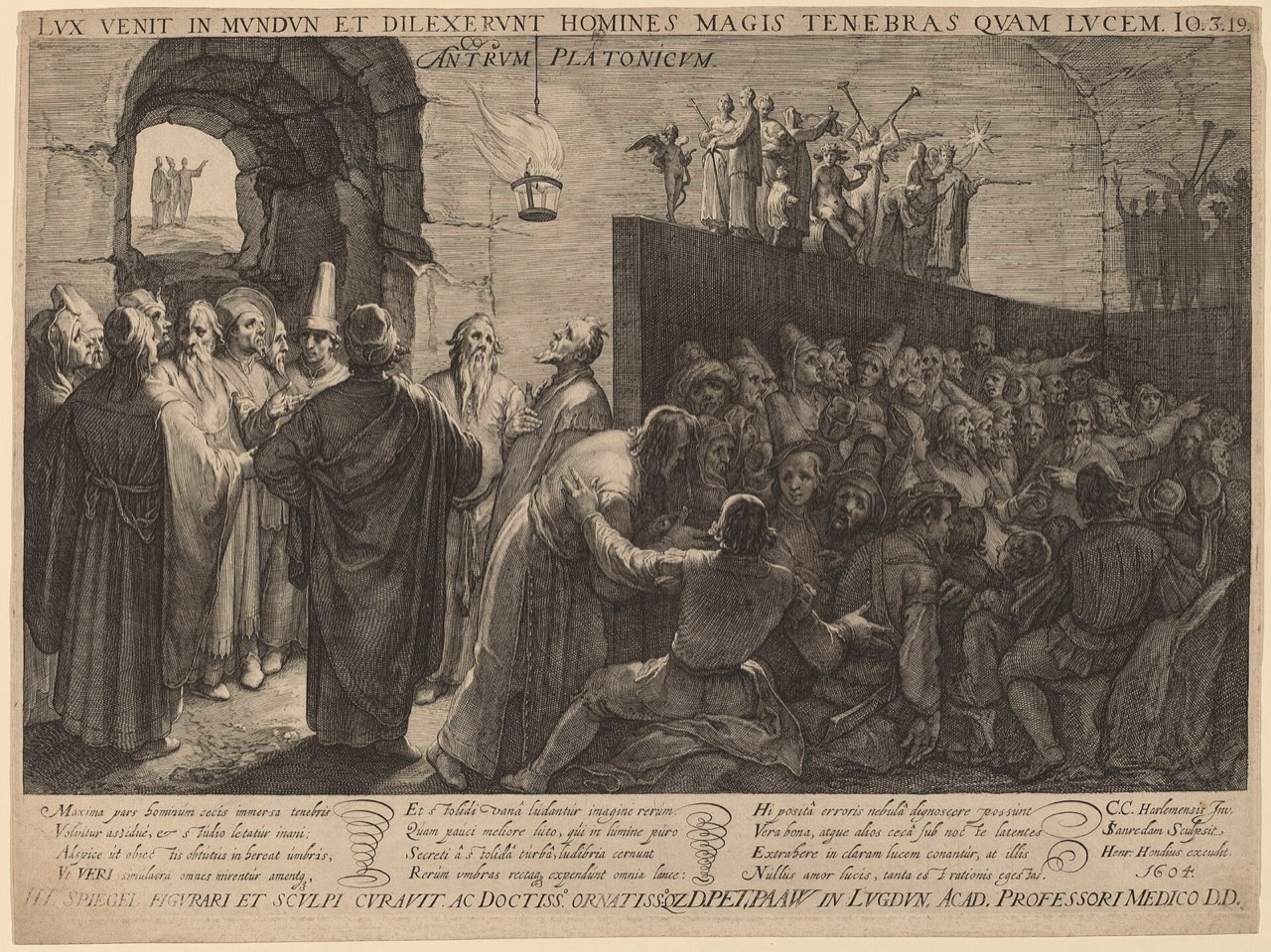
The worry that the world might be an illusion is ancient. Plato imagined prisoners in a cave mistaking shadows for reality. The Chinese philosopher Zhuangzi wondered whether he was a man who had dreamed of being a butterfly or the reverse. In the 1600s, Descartes asked how he could be sure a demon was not deceiving all his senses.
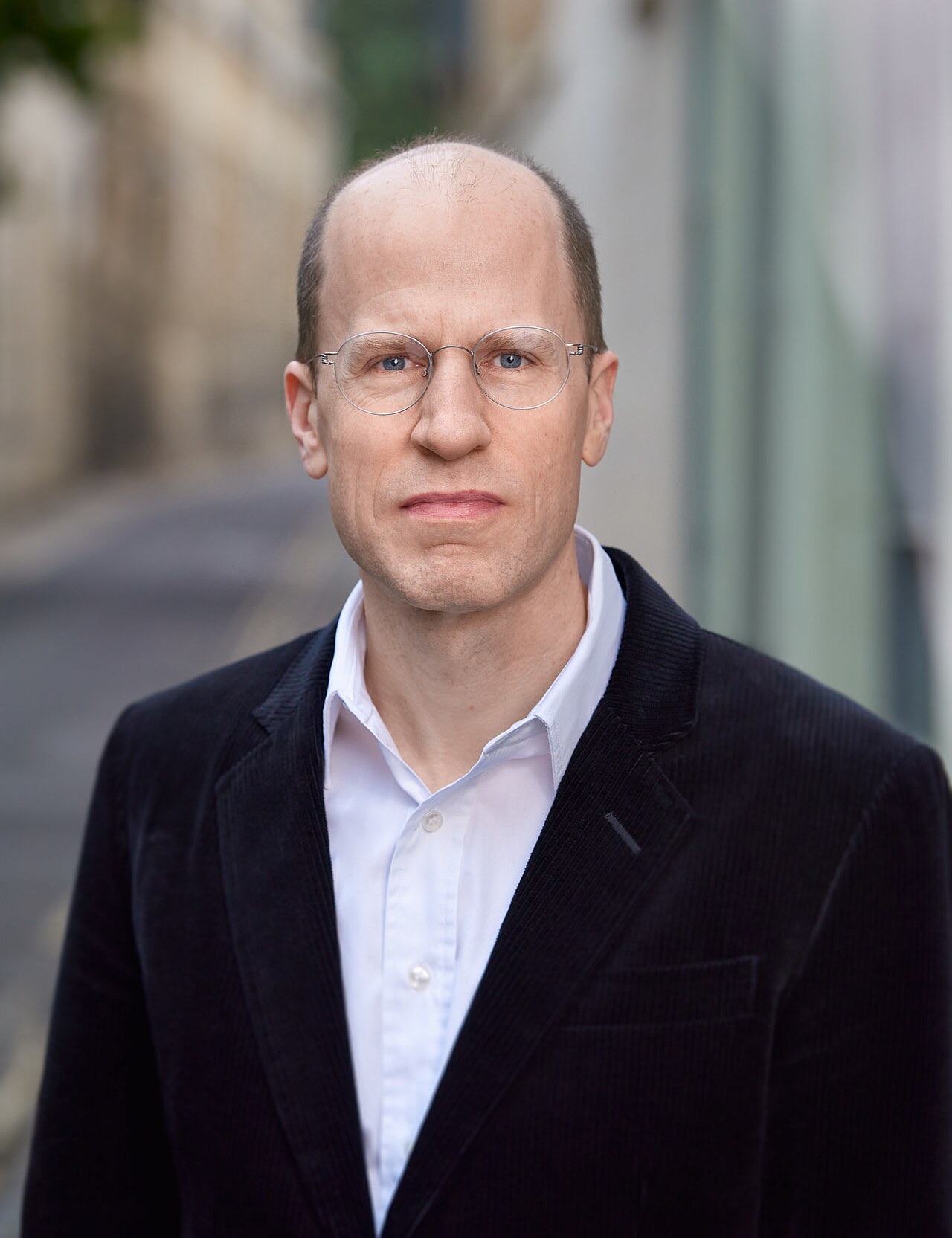
The modern version appeared in 2003, when Oxford philosopher Nick Bostrom published a paper titled “Are You Living in a Computer Simulation?”. The film The Matrix had come out four years earlier, and the public was ready for it.
The argument
Bostrom did not claim that we are simulated. He argued that at least one of three statements must be true:
- Almost all civilisations die out before they become capable of simulating conscious minds.
- Advanced civilisations can do it but almost never choose to simulate their own history.
- We are almost certainly living in a simulation.
The logic runs like this. If a civilisation can simulate minds and does so, it can run the simulation many times. Simulated people would then vastly outnumber real ones. If you are a conscious being with no way to tell which kind you are, the odds say you are one of the many.
To reject statement three, you have to accept one of the first two.
Versions of the idea
The ancestor simulation. Our descendants, or beings like them, are replaying their past.
The experiment. Someone is running our universe to see what happens, with no special interest in us.
The game. Some inhabitants are players from outside and the rest are background.
The partial simulation. Only what is being observed is computed in detail, to save resources.
Simulations all the way down. Our simulators are themselves simulated.
The arguments, point by point
Look how fast our own simulations improve
Supporters say: in fifty years, video games went from two paddles and a dot to photorealistic worlds. Keep going and simulations will be indistinguishable from reality. Entrepreneur Elon Musk argued on this basis in 2016 that the chance we are in “base reality” is one in billions.
The response: better graphics are not conscious minds. Nobody knows whether consciousness can run on a computer at all. The whole argument rests on assuming it can.
The universe looks mathematical
Supporters say: nature follows compact mathematical rules, has a maximum speed and appears to come in smallest possible units, like a program with a clock rate and a pixel size.
The response: mathematics describing nature well is what physics is. It would be true in a simulated universe and a real one alike, so it is not evidence either way.
Quantum strangeness looks like rendering
Supporters say: particles seem not to have definite properties until measured, like a game that only draws what the player is looking at.
The response: physicists say this misreads quantum mechanics, in which “measurement” means physical interaction and not being watched by a mind. The universe also evolved for billions of years with nobody observing it.
The computing cost
Critics say: simulating every particle in the universe would take a computer bigger than the universe.
The response: supporters reply that only what conscious observers examine needs detail, and that we know nothing about the physics available to the simulators.
It cannot be tested
Critics say: a claim that fits every possible observation is not science. Some physicists call the hypothesis pseudoscience, or religion in technical language, since it posits a creator outside the universe.
The response: a few physicists have proposed tests. In 2012 a group suggested that a simulation run on a grid might leave a pattern in the directions of the most energetic cosmic rays. No such pattern has been found. A missing signal does not rule out a more sophisticated simulation, which is the critics’ point.
What notable thinkers have said
- Nick Bostrom has said he puts the probability somewhat below one half.
- David Chalmers, a philosopher of mind, argues that even if we are simulated, tables and trees and other people are still real. They are just made of information at the bottom.
- A 2020 statistical analysis by an astronomer at Columbia University put the odds close to even, slightly favouring base reality, and noted they would shift sharply if humans ever built a conscious simulation themselves.
- Critics, including several prominent physicists, argue that the argument smuggles in unprovable assumptions about what future technology and alien motives must be like.

What is still argued about
- Whether consciousness depends on biology or could exist in any sufficiently complex system.
- Whether any observation could distinguish a simulated universe from a real one.
- Whether it would matter. If the simulation is perfect, your life, relationships and choices are the same in both cases.
Why people care
The idea speaks to an age that spends much of its time inside screens. It also gives a scientific-sounding form to very old questions: who made the world, why are the rules what they are, and what happens when it ends.
Sources
- Nick Bostrom, “Are You Living in a Computer Simulation?”, Philosophical Quarterly 53 (2003), pp. 243-255, and summary
- Nick Bostrom, “The Simulation Argument: some explanations”, Analysis (2009)
- Beane, Davoudi and Savage, “Constraints on the Universe as a Numerical Simulation” (2012)
- David Kipping, “A Bayesian Approach to the Simulation Argument”, Universe (2020)
- Scientific American, “Do We Live in a Simulation? Chances Are about 50-50” (2020)
- David Chalmers, Reality+: Virtual Worlds and the Problems of Philosophy (2022)