
The short version
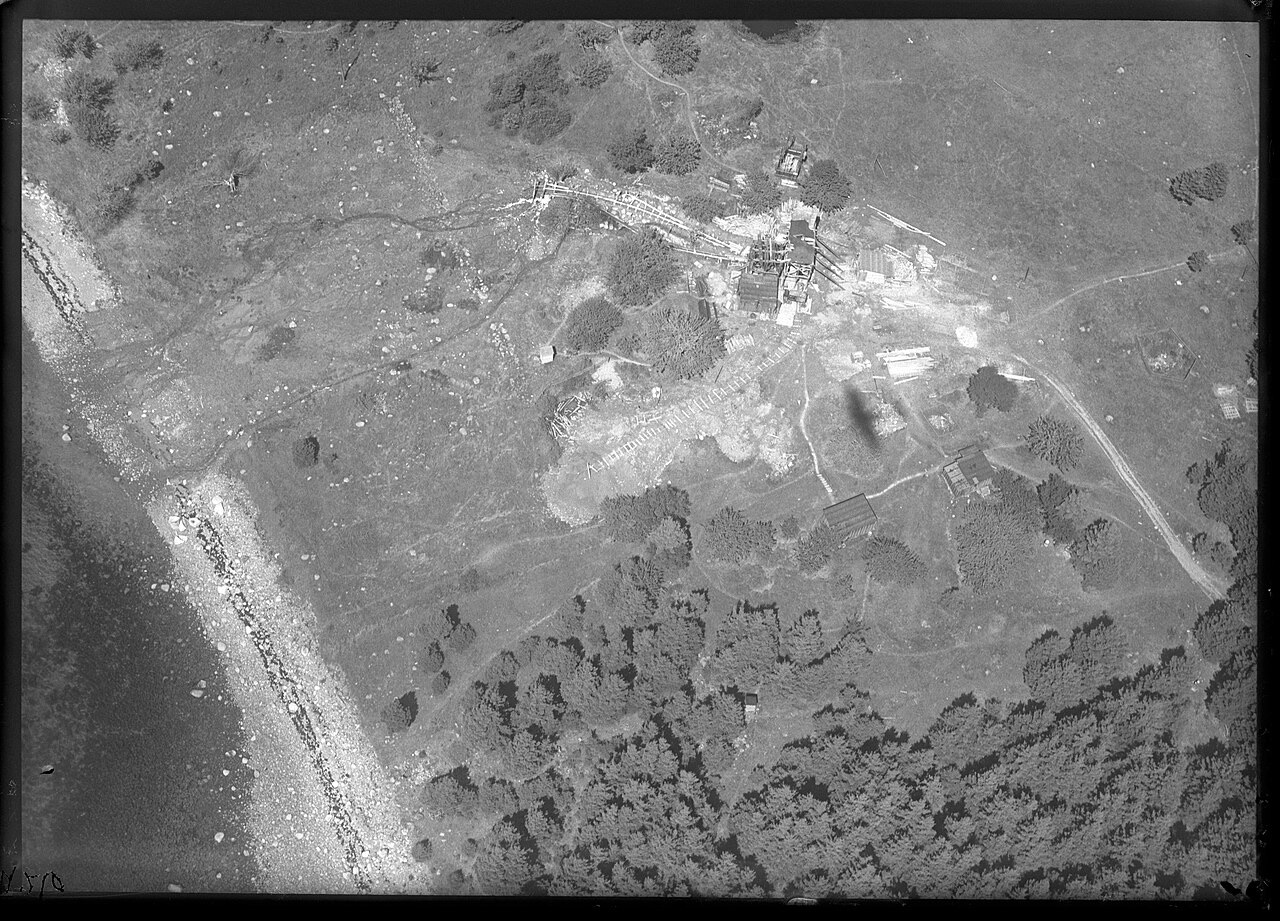
Oak Island is a small, wooded island in Mahone Bay, on the Atlantic coast of Nova Scotia. According to a story first written down in the mid-1800s, a teenager found a mysterious filled-in shaft there in 1795. Ever since, treasure hunters have dug in what became known as the “Money Pit”, chasing theories about pirate gold, French crown jewels, Shakespeare’s manuscripts and the treasure of the Knights Templar. The diggers have found flooding tunnels, a few puzzling objects and a great deal of mud. Six people have died. Sceptics, including geologists, say the pit is a natural sinkhole and the legend grew in the retelling. A television series has followed the latest hunt since 2014. No treasure has been found.
The legend
In the traditional account, 16-year-old Daniel McGinnis came upon a depression in the ground near a large oak tree in 1795, with signs that a block and tackle had once hung above it. He and two friends dug and found a filled-in shaft with platforms of logs. A company formed in the early 1800s dug deeper. At about 90 feet, the story goes, the diggers found a flat stone carved with strange symbols. The next morning the shaft was flooded.
Later searchers found tunnels connecting the pit to the sea, which seemed to explain the flooding. To believers, they were booby traps built by whoever buried the treasure. In 1849 a drilling team reported bringing up three links of gold chain. The inscribed stone disappeared around 1919. A text supposedly decoded from it, “Forty Feet Below Two Million Pounds Are Buried”, is considered a hoax by most Oak Island researchers.
How old is the story?
Very little was written down at the time. According to an analysis by the sceptic site Critical Enquiry, the first published mention of the diggings appeared only in 1857, and fuller newspaper accounts followed in the early 1860s, more than half a century after the events they described. They relied on memories passed down by word of mouth. The investigator Joe Nickell argues that some famous details, such as a platform every ten feet and the block and tackle above the pit, probably appear only in later retellings.
The hunters
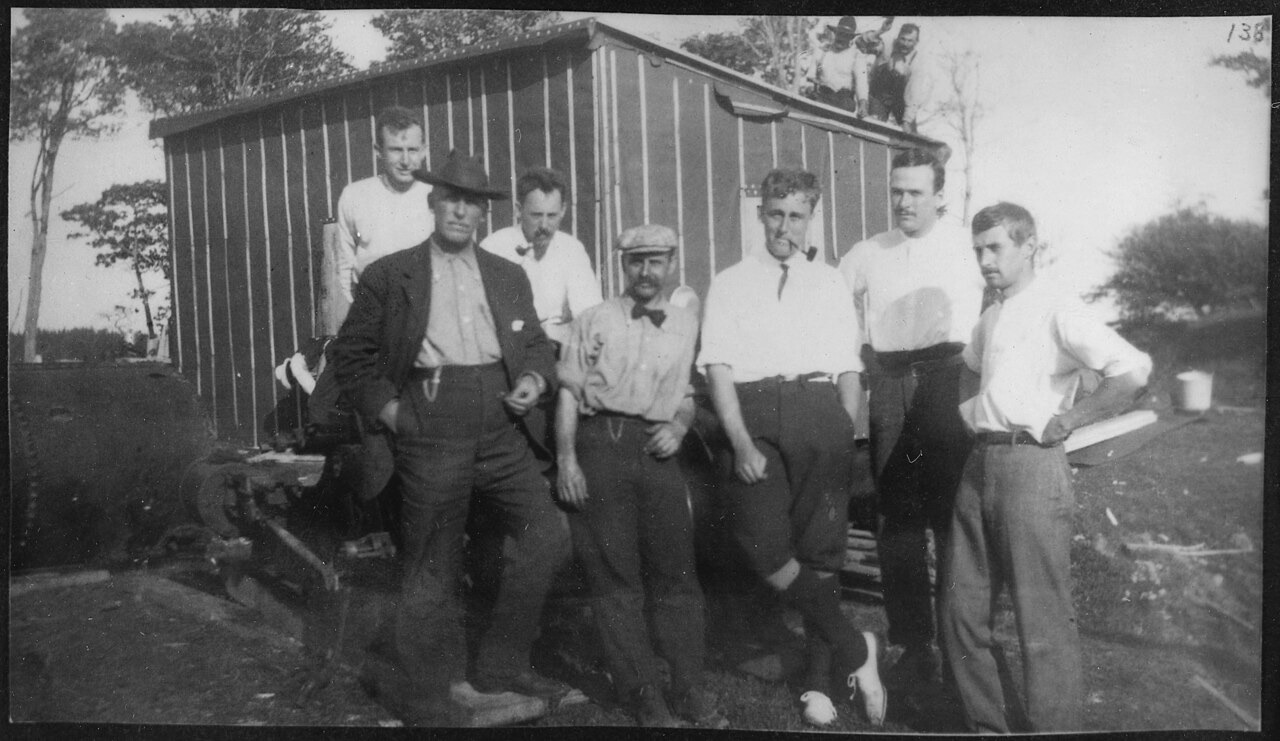
The search has attracted famous names. In 1909 the young Franklin D. Roosevelt, later US president, bought shares in a treasure company and took part in the work on the island. The engineer who led that dig, Henry Bowdoin, wrote in Collier’s in 1911: “My experience proved to me that there was not, and never was, a buried treasure on Oak Island.” He also said the inscribed stone had only ever borne scratches made by workmen. The actor John Wayne is often said to have been involved; the link found in the sources is a 1970 equipment lease to Triton by a company he part-owned.
In 1965 a causeway was built to bring a large excavating machine onto the island. In the late 1960s Dan Blankenship, a building contractor from Florida, and David Tobias, a Montreal businessman, formed a company called Triton Alliance. Blankenship sank a 235-foot shaft near the Money Pit, known as Borehole 10-X, and lowered a camera into it. He believed the images showed chests and human remains. He searched the island for more than 50 years and died in 2019, aged 95. In 2006 Tobias sold his share to two brothers from Michigan, Rick and Marty Lagina.
The cost
Six people have died in the search, in collapsed pits or other accidents. A workman was scalded to death when a boiler burst around 1861, and another fell to his death in 1897. In 1965 Robert Restall, his son and two other men died in a shaft after being overcome by gas.
The theories
Something was buried there
Believers say: the pit, the flood tunnels and the inscribed stone show that someone went to great lengths to hide something. Suggestions include the pirates William Kidd, Henry Morgan and Blackbeard, Spanish gold, the French crown jewels of Marie Antoinette, the Knights Templar and the Holy Grail, and manuscripts by Francis Bacon proving he wrote Shakespeare’s plays. Flasks containing traces of mercury found in 1937 encouraged the Bacon theory.
The response: Sky History says the story of Marie Antoinette’s chambermaid burying jewels on the island is “without provenance”. The gold chain links, according to one account cited by Nickell, were planted by workers to keep the money coming.
It is a natural sinkhole
Sceptics say: the rock under Oak Island is limestone and anhydrite, which dissolve to form caves and sinkholes. In 1878 a sinkhole opened under a team of oxen ploughing on the island. In 1911 the geologist E. Rudolph Faribault found numerous sinkholes on the nearby mainland and concluded that the supposed structures on the island were “really but natural sink holes and cavities”. In 1949 well diggers on the shore of Mahone Bay, about five miles away, found a similar pit with stones and logs at irregular intervals. Nickell argues that the “Money Pit” and “pirate tunnels” are natural formations, and that the legend took shape among searchers who were Freemasons and saw it through the symbolism of their order.
Believers say: the early accounts describe a filled-in shaft with platforms of logs, and, as the researcher William Crooker notes, all of them mention an inscribed stone.

The TV years
The Curse of Oak Island, which follows the Lagina brothers, first aired on the History channel in January 2014. Its 14th season premiered on 10 November 2026. Finds shown on the series include a lead cross, which researchers at the University of New Brunswick found was made of lead of European origin, though they could not date it, and a Spanish copper coin. The show’s archaeologist, Laird Niven, works with the provincial government to make sure the digging follows heritage rules.
Treasure hunting on the island is regulated by its own law. In 2010 Nova Scotia introduced the Oak Island Treasure Act, and anyone wanting to search must hold a licence and pay a royalty on what they keep.
What is still argued about
- Whether anything was ever buried in the Money Pit.
- How much of the early story is true.
- What, if anything, the latest finds reveal.
No scientific poll appears to have asked whether people think there is treasure on the island.
Sources
- The Canadian Encyclopedia, “Oak Island”
- Joe Nickell, “The Secrets of Oak Island”, Skeptical Inquirer (2000)
- Critical Enquiry, “History, Hoax, and Hype: The Oak Island Legend”, chapter 3
- Jason Colavito, “Solving Oak Island” (reprint of H. L. Bowdoin, Collier’s, 1911)
- CBC News, “Curse of Oak Island reignites centuries-old treasure hunt” (2014)
- CBC News, “Fans mourn cast member from The Curse of Oak Island” (2019)
- The Globe and Mail (Canadian Press), “Famed Nova Scotia treasure hunter Dan Blankenship dies at 95” (2019)
- Sky HISTORY, “Dan Blankenship: a treasure-hunting life”
- Sky HISTORY, “9 historical figures connected to the Oak Island mystery”
- Sky HISTORY, “The Curse of Oak Island: Who is Laird Niven?”
- University of New Brunswick, “UNB researchers have moment in the spotlight on History Channel show” (2018)
- Atlas Obscura on Slate, “The Centuries-Long Hunt for the Treasure of Oak Island” (2014)
- Government of Nova Scotia, “Changes to Treasure Hunting Regulations Introduced” (2010)
- Nova Scotia Permits Directory, “Treasure Trove Licence”
- TV Guide, “The Curse of Oak Island”