
The short version
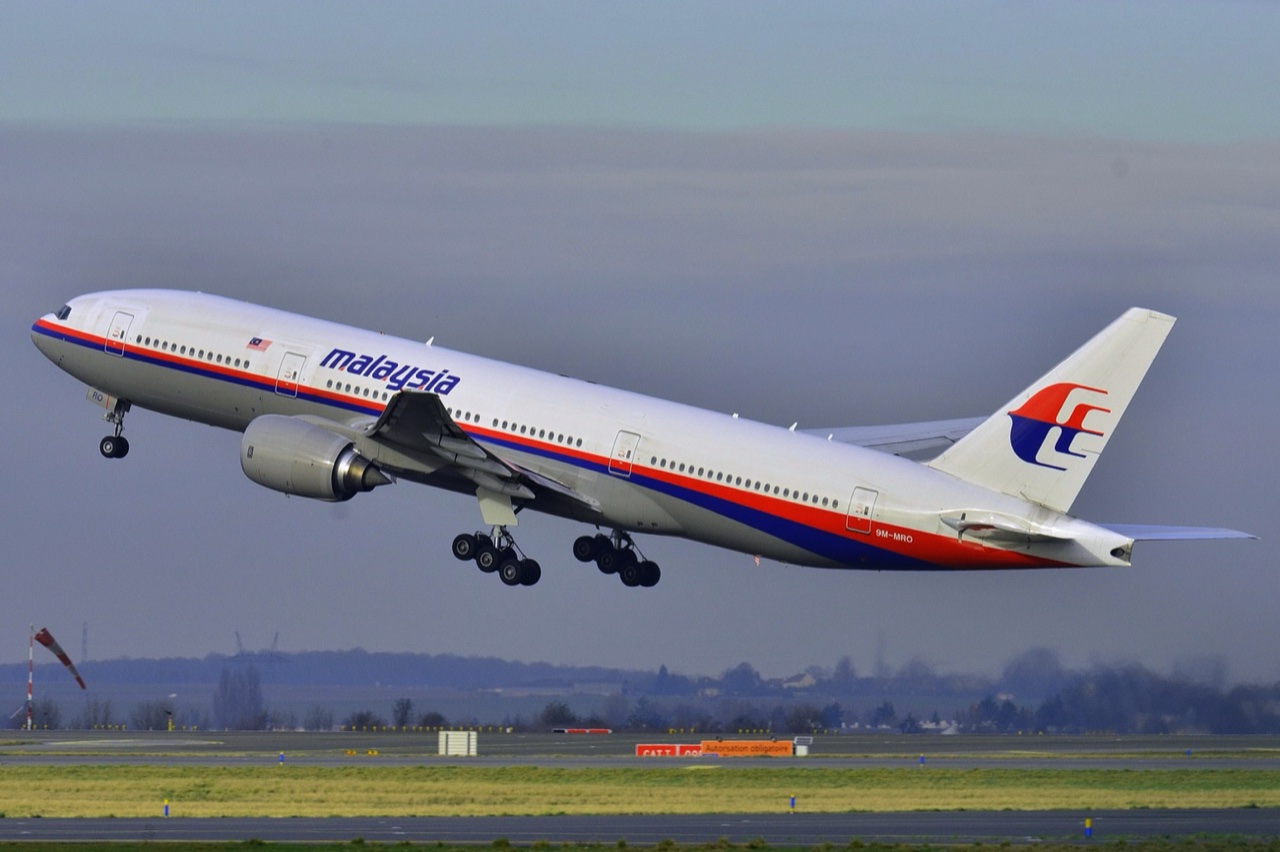
Malaysia Airlines flight MH370 left Kuala Lumpur for Beijing on 8 March 2014. Less than forty minutes later it vanished from air traffic control screens. Military radar and satellite data showed that it turned back, crossed Malaysia, and then flew south over the Indian Ocean until its fuel ran out. Pieces of the aircraft have washed ashore in Africa. The main wreckage and the flight recorders have never been located, and no official investigation has been able to say why it happened.
What is known
The disappearance. At 1:19 am the cockpit signed off from Malaysian air traffic control with a routine good night. Two minutes later the aircraft’s transponder, which reports its identity and position, stopped transmitting. The plane never contacted Vietnamese controllers.
The turn. Military radar tracked an aircraft making a sharp turn to the west, flying back across the Malay Peninsula, and then north-west up the Strait of Malacca until it passed out of range.
The satellite signals. A satellite communications unit on the aircraft continued to answer automatic hourly signals from a ground station for almost seven hours. Analysis of those signals placed the aircraft’s final position somewhere along an arc in the southern Indian Ocean, west of Australia.
The debris. In July 2015 a wing component was found on the island of Réunion and confirmed to be from the aircraft. More than thirty other pieces, some confirmed and some probable, have been found on the coasts of east Africa and nearby islands.
The official report. Malaysia’s investigation concluded in 2018 that the aircraft’s change of course was made under manual control and not by a mechanical fault. It could not determine who was responsible and did not rule out interference by a third party.
The searches
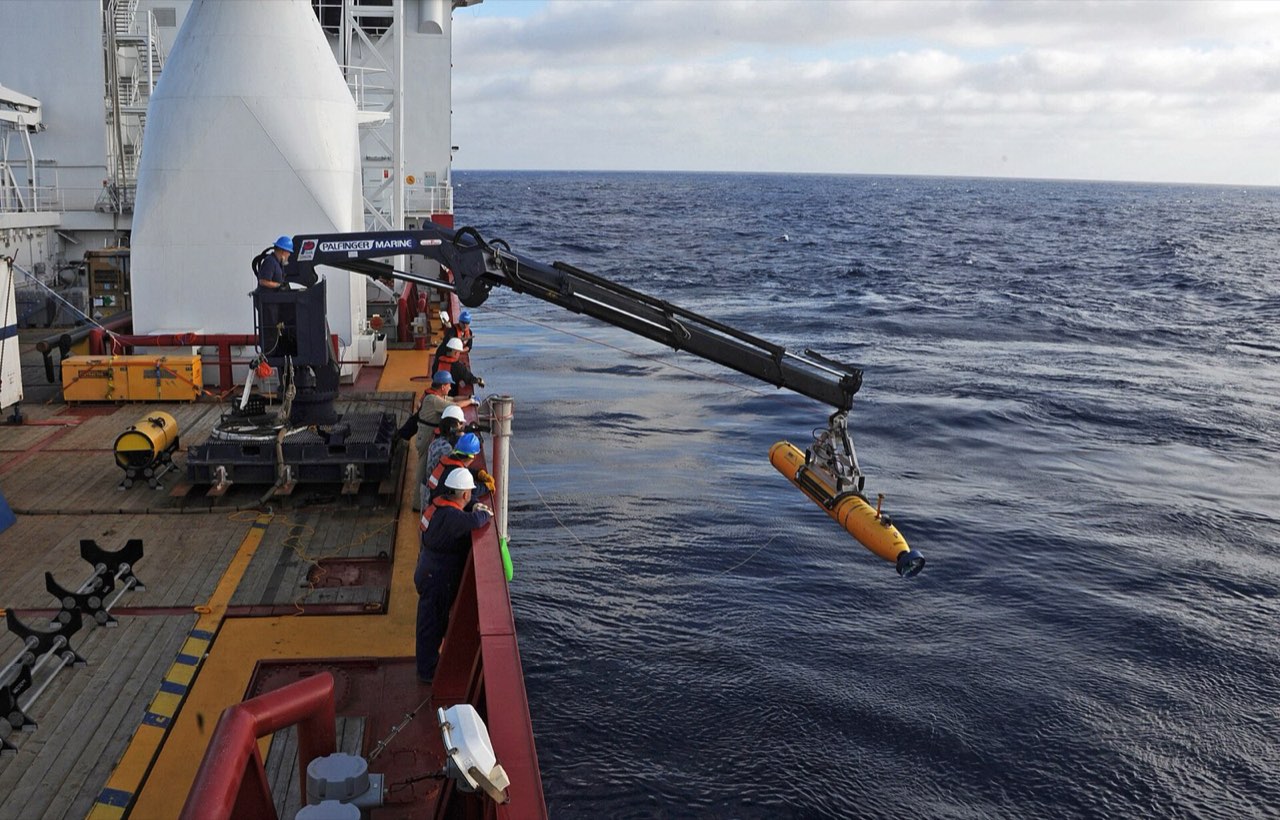
An Australian-led underwater search covered about 120,000 square kilometres of seabed and ended in 2017 without success. A private company, Ocean Infinity, searched again in 2018 on a “no find, no fee” basis.
In 2025 Malaysia agreed a new contract with the same company, worth $70 million if the wreckage was found. The search ran in two phases between March 2025 and January 2026 and scanned more than 7,500 square kilometres of sea floor. Malaysian authorities announced in March 2026 that it had found nothing. Families of those on board urged the government to extend it. In June 2026 Malaysia extended the contract for another year, to 30 June 2027, on the same “no find, no fee” terms, so that the company could cover the remaining 7,400 square kilometres of the planned area. Its vessels were expected to return between November 2026 and April 2027, when the sea is calmer.
The main explanations
A deliberate act by a pilot
The case for: the aircraft’s communications were switched off in sequence at the exact point of handover between two countries’ controllers. The route that followed ran along the border between air traffic regions, which made it less likely to be challenged. Investigators recovered data from the captain’s home flight simulator that included a route ending in the southern Indian Ocean. Many aviation experts consider this the explanation that best fits the evidence.
The case against: the official investigation found no evidence of financial trouble, distress or unusual behaviour on the part of either pilot. The simulator data was fragmentary. The captain’s family and colleagues reject the theory, and nothing has been proven.
Hijacking by someone else on board
The case for: the flying was skilled and purposeful. Two passengers were travelling on stolen passports.
The case against: the two men were identified as asylum seekers with no known links to any group. Nobody claimed responsibility and no demands were made.
Fire, decompression or electrical failure
The case for: a fire or loss of cabin pressure could have disabled communications and incapacitated the crew, leaving the aircraft to fly on autopilot until it ran out of fuel. The cargo included a large consignment of lithium batteries.
The case against: the aircraft made several deliberate turns after contact was lost. An emergency severe enough to disable the crew would be unlikely to leave the aircraft flying normally for seven hours.
Shot down or diverted
The case for: some argue the aircraft was shot down accidentally during a military exercise and the event was covered up, or that it was diverted to a remote airbase.
The case against: the debris found thousands of kilometres away fits a crash in the southern Indian Ocean and not one near the point of disappearance. No radar, satellite or eyewitness evidence supports either idea.
It flew north
The case for: the satellite data can be read as either a southern or a northern path. One researcher has argued that the signal was tampered with and that the aircraft went to central Asia.
The case against: a further analysis of the signal’s frequency pointed south, and the debris was found in the Indian Ocean. A northern path would have crossed several countries’ air defences.
Why it has not been found
The search area is one of the most remote places on Earth. The water is up to six kilometres deep, the seabed is mountainous, and the weather often stops work. The satellite arc is thousands of kilometres long, and small differences in assumptions about speed and altitude shift the likely crash point by hundreds of kilometres.

What is still argued about
- Who was at the controls.
- How the aircraft met the sea, whether in a steep dive or a controlled ditching. The condition of the debris has been interpreted both ways.
- Where to look next. Independent analysts have proposed several areas that have not been fully covered.
The disappearance led to new international rules requiring airliners to report their position more often.
Sources
- NPR / Associated Press, “12 years on, renewed hunt for missing Malaysia Airlines flight comes up empty” (March 2026)
- PBS NewsHour / AP, “Renewed search for missing Flight MH370 comes up empty 12 years later as families press for answers” (2026)
- The Star, “Search for MH370 covers 7,571 sq km, but wreckage remains elusive” (March 2026)
- AVweb, “Renewed MH370 Search Concludes Without Findings” (2026)
- Malaysian ICAO Annex 13 Safety Investigation Team, Safety Investigation Report MH370 (July 2018)
- Australian Transport Safety Bureau, The Operational Search for MH370 (2017)
- Associated Press via WTOP, “Malaysia extends search for MH370 for another year, keeping families’ hopes alive” (June 2026)
- The Star, “Govt extends deal with Ocean Infinity to search for MH370 wreckage” (June 2026)