
The short version
On 4 December 1872 the crew of the brigantine Dei Gratia sighted a ship drifting in the Atlantic near the Azores. It was the Mary Celeste, which had left New York almost a month earlier with a cargo of alcohol for Genoa. There was no one on board. The ship was seaworthy, with six months of food and water, and the crew’s belongings were left behind. The only boat was gone, along with the ship’s papers and the captain’s navigation instruments. An inquiry in Gibraltar found no evidence of foul play. Most modern explanations suggest that the people on board left in the boat in a hurry, perhaps fearing an explosion or believing the ship was sinking, and were lost at sea. Nobody knows for certain.
The ship and its people
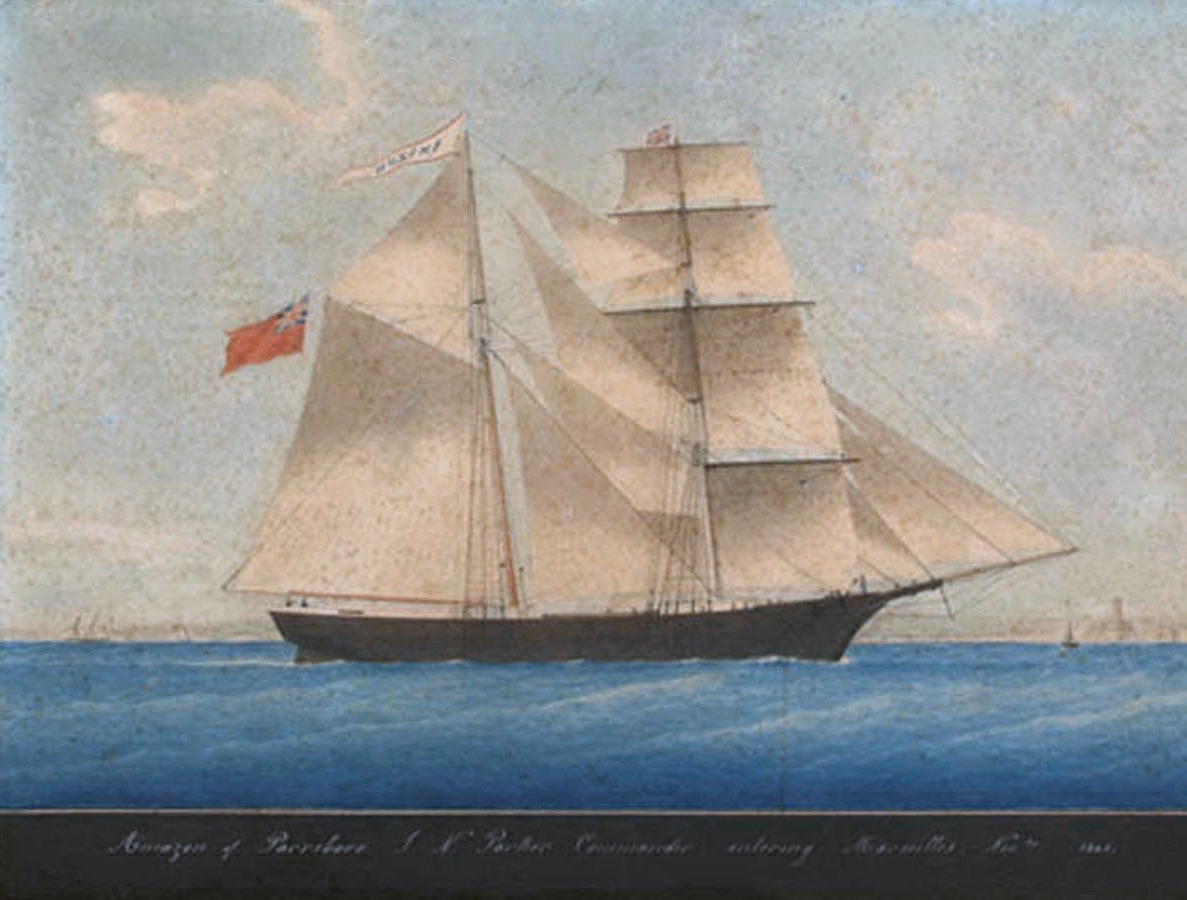
The ship was built in 1861 at Spencers Island, Nova Scotia, as the Amazon. It had a run of bad luck: its first captain died on the maiden voyage, and it was wrecked at least once before being sold in New York in 1868, repaired and renamed Mary Celeste. Benjamin Briggs, an experienced captain who owned a share in the ship, took command for the voyage to Genoa. It was common at the time for captains to take their families to sea.
The seven crewmen, as named by Royal Museums Greenwich, were the first mate Albert Richardson, the second mate Andrew Gilling, the steward William Head, and the seamen Gottleib Gouldschaal, Arian Martens and the brothers Boz and Volkert Lorenzen. The cargo was 1,701 barrels of alcohol. The ship left New York on 7 November 1872.
What the boarding party found
The captain of the Dei Gratia, David Reed Morehouse, knew Briggs. He sent his first mate, Oliver Deveau, and second mate, John Wright, across to the drifting ship. They found:
- no one on board, and the ship’s only boat missing;
- about three and a half feet of water in the hold, and one of the two pumps partly taken apart, with a sounding rod nearby;
- hatches open and some sails set, others torn or furled;
- six months of food and plenty of drinking water;
- the crew’s belongings still on board, but the ship’s papers, the captain’s chronometer and sextant gone.
The last entry on the log slate was from the morning of 25 November and placed the ship six miles from Santa Maria, the easternmost island of the Azores. A sword was found in the captain’s cabin, but the boarders saw no obvious signs of violence. A skeleton crew of three from the Dei Gratia sailed the Mary Celeste to Gibraltar. One of them said she was “fit to go round the world”.
The Gibraltar inquiry
At Gibraltar the ship was impounded and a salvage court sat from December 1872 until February 1873. The Attorney General for Gibraltar, Frederick Solly-Flood, was convinced that the crew had got drunk on the alcohol, murdered the captain and his family and escaped in the boat. As the inquiry went on, the evidence against this mounted. Tests showed that suspected bloodstains on the sword were not blood, and none of the alcohol barrels had been tampered with. The court found no evidence of foul play, but awarded the Dei Gratia’s crew only a fraction of the ship’s value, which some took as a sign of lingering suspicion.
Fiction and myth
In January 1884 the Cornhill Magazine published an anonymous story, “J. Habakuk Jephson’s Statement”, about a ship called the “Marie Celeste”. It was written by a 25-year-old ship’s doctor, Arthur Conan Doyle, and many readers took it as fact. Later retellings added details that were never in the real record, such as cups of tea still warm on the table and a half-eaten breakfast. Forged “survivor” accounts appeared in the decades that followed.
The theories
Fear of an explosion
Supporters say: nine of the 1,701 barrels were found empty. They were made of red oak, which is more porous than the white oak used for the rest. Briggs may have smelled alcohol fumes, feared the cargo would explode, and ordered everyone into the boat, perhaps meaning to stay attached to the ship by a line that then parted. A Nova Scotia museum curator says this is the contemporary view. In 2006 a chemist at University College London, Andrea Sella, recreated a vapour explosion in a model hold and found that it produced a wave of flame that left no soot or scorching. In 2026 chemists at the University of Manchester made a similar demonstration for a television documentary.
Doubters say: the boarding party found the main hatch secured and did not report smelling any fumes, and there was no sign of fire.
The ship seemed to be sinking
Supporters say: for a 2007 Smithsonian Channel documentary, the researcher Anne MacGregor and the oceanographer Phil Richardson concluded that Briggs was about 120 miles west of where he thought he was, probably because of a faulty chronometer. The ship had recently been refitted and had once carried coal, so dust and debris could have clogged the pumps, which would explain the dismantled pump. Unable to tell how much water was in the hull, and having just sighted land, Briggs may have decided to abandon ship. Their drift modelling suggested the empty ship could have sailed itself to where it was found.
Doubters say: the ship was in good enough shape for three men to sail it to Gibraltar. The documentary itself reached no definite conclusion.
Foul play
Supporters say: mutiny, as Solly-Flood believed; pirates; or an insurance fraud, since Briggs and Morehouse knew each other.
Doubters say: there were no signs of a struggle, and the valuable cargo and the crew’s belongings were untouched, which seemed to rule out pirates. MacGregor found that the Lorenzen brothers, suspected because their belongings were missing, had lost their gear in a shipwreck earlier that year. Skeptoid notes that the fraud theories made no sense from a profit point of view.
Stranger ideas
Waterspouts, a seaquake, a giant octopus and sea monsters have all been suggested. Skeptoid describes these as suggestions from the fringe.

What happened next
The Mary Celeste sailed on for another 12 years. In 1885 its captain deliberately ran it onto a reef off Haiti in an insurance fraud. In 2001 a team led by the novelist Clive Cussler said it had found the wreck there, but tree-ring dating later suggested that the timbers came from trees still growing ten years after the Mary Celeste was lost.
What is still argued about
- Why an experienced captain would abandon a seaworthy ship.
- What became of the boat and the ten people in it.
No representative poll appears to have asked what people think happened.
Sources
- Royal Museums Greenwich, “The mystery of the Mary Celeste”
- American Heritage, “The Mystery Of The Mary Celeste” (1981)
- Smithsonian Magazine, “Abandoned Ship: The Mary Celeste” (2007), archived copy
- CBC News, “A N.S. ghost ship is fading from memory — 150 years after its crew disappeared” (2023)
- HISTORY.com, “What Happened to the Mary Celeste?”, archived copy
- UCL News, “Solved: The Mystery of the Mary Celeste” (2006), archived copy
- Chemistry World, “Chemists think they know what happened on board the Mary Celeste” (2026)
- Skeptoid, “The Mystery of the Mary Celeste” (2011)
- NUMA, “The Curse of the Mary Celeste” (2024)
- James Delgado, “Don’s Diary”, Times Higher Education (2001)