
The short version
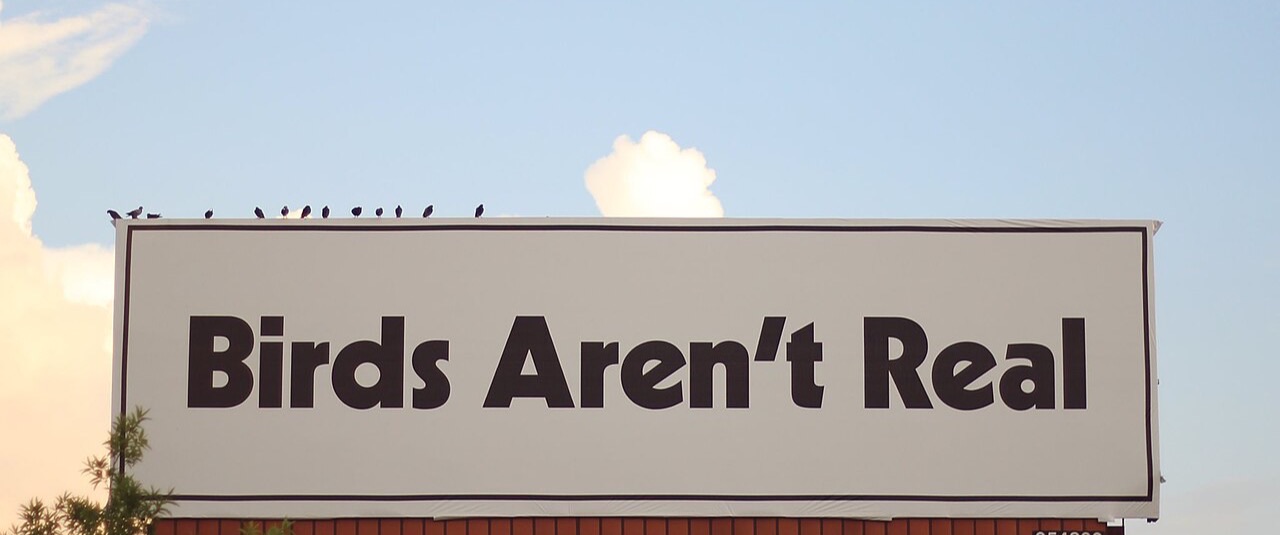
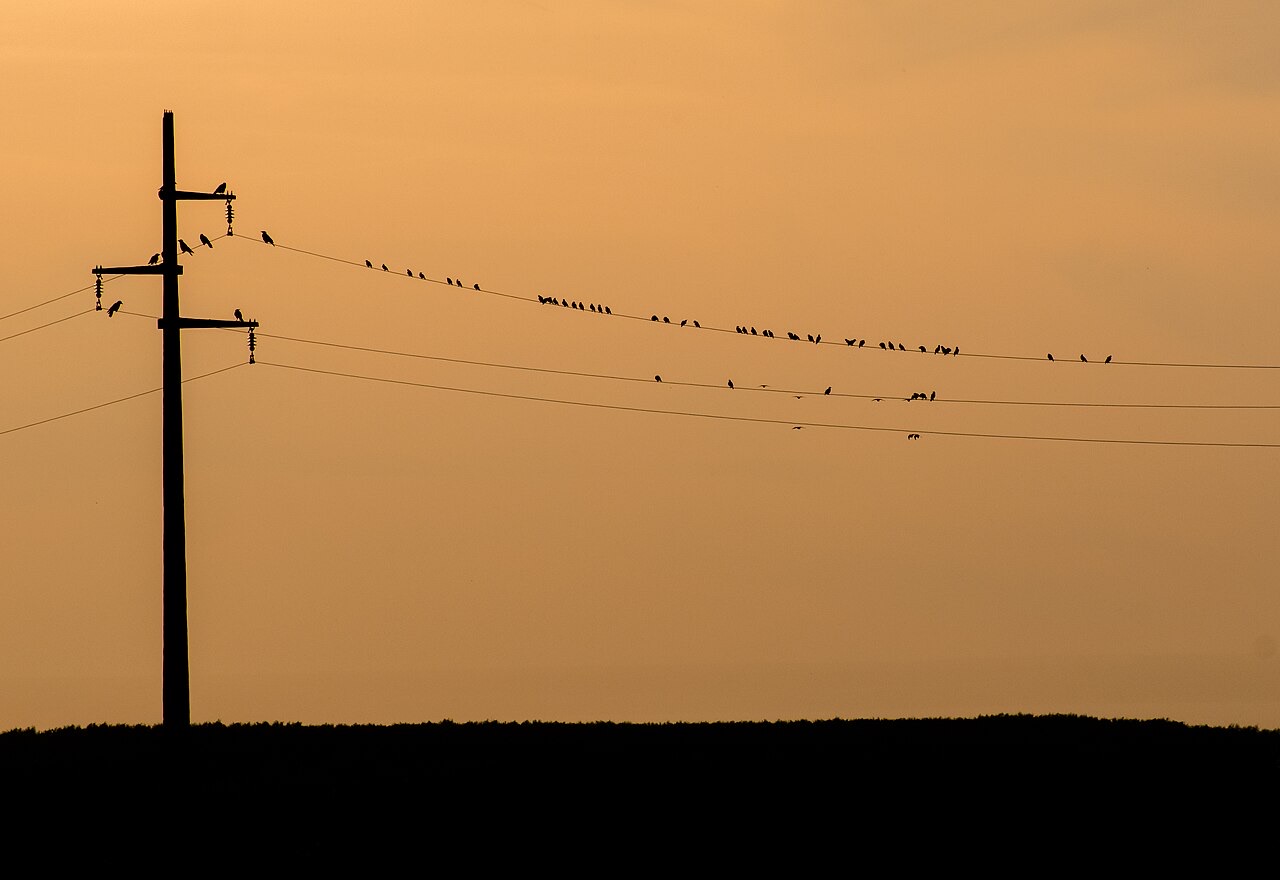
Birds Aren’t Real is a satirical conspiracy theory. Its story is that the US government secretly killed the country’s birds and replaced them with drones that spy on Americans, and that the “birds” sitting on power lines are recharging. It was started in Memphis in January 2017 by Peter McIndoe, then a university student who had grown up in Arkansas, as a spur-of-the-moment joke. For years he played a true believer in public, and the movement grew to billboards, rallies and accounts with hundreds of thousands of followers. In December 2021 he told The New York Times that it was a parody. Its organisers say it is a way to laugh at misinformation rather than be overwhelmed by it. Nobody behind it claims that birds are actually drones.
How it started
In January 2017, just after Donald Trump had been sworn in as president, McIndoe was visiting friends in Memphis when a women’s march went through downtown, with pro-Trump counter-protesters also there. He ripped a poster off a wall, turned it over and wrote three random words on the back: “Birds Aren’t Real.” “It was just the most absurd thing I could think of,” he later told 60 Minutes. He walked the streets improvising a stream of claims. Someone filmed him, the video was posted on Facebook, and it went viral, especially among teenagers in the American South.
McIndoe decided to lean into it. With a friend, Connor Gaydos, he wrote a false history of the movement, built up elaborate theories and produced fake documents to support them.
The “evidence”
The story, as the movement tells it, goes roughly like this. The CIA was tired of birds dropping mess on its cars. Between 1959 and 1971, according to the version reported by Audubon magazine, the government killed the birds using specially altered B-52 bombers stocked with poison, and replaced them with robots that could watch Americans. The movement’s own telling varies on the dates. President John F. Kennedy, the story goes, was assassinated by the CIA because he refused to go along with the plan. Taxpayers’ money has been spent on the “Turkey X500”, a robot that hunts large birds. And the power lines that cross the country were put up so the drones could sit on them and charge.
McIndoe hired an actor to play a former CIA agent confessing to his part in the plot; a video of the “confession” passed 20 million views on TikTok. He also hired actors to play adult “bird truthers” in videos.
The movement
By late 2021 billboards reading “Birds Aren’t Real” had gone up in Pittsburgh, Memphis and Los Angeles, and the movement’s Instagram and TikTok accounts had hundreds of thousands of followers. In November 2021 supporters protested outside Twitter’s headquarters in San Francisco, demanding that the company change its bird logo. 60 Minutes said in 2022 that more than a million people had become followers. The slogan spread to bumper stickers and appeared during halftime at the NCAA men’s basketball national championship game. In October 2022 the group held what it called its “biggest rally ever” under the Washington Square Arch in New York, with hundreds of participants holding anti-bird signs.
Money from merchandise lets McIndoe and Gaydos work on it full time. McIndoe said the proceeds also pay for billboards and for flying members of the “Bird Brigade” to rallies.

Breaking character
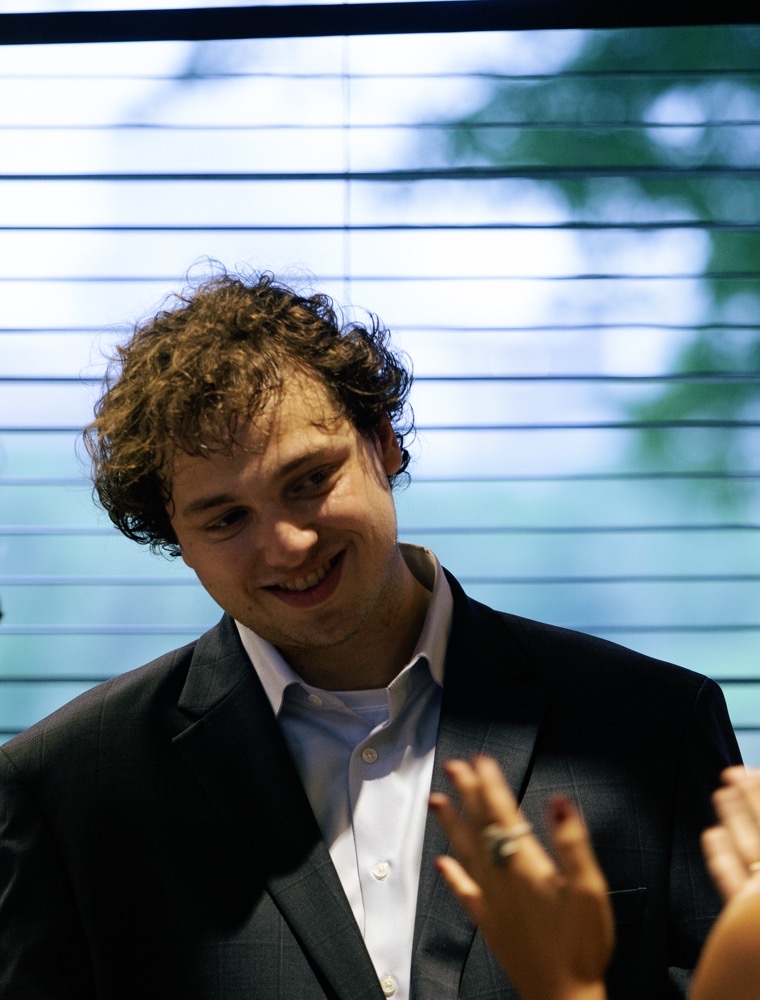
For years McIndoe stayed in character as a cowboy-hatted, megaphone-carrying believer. In December 2021 he told The New York Times that he was ready to reveal the parody, so that people would not think birds really are drones. “It’s a safe space for people to come together and process the conspiracy takeover of America,” he said. “It’s a way to laugh at the madness rather than be overcome by it.”
On 60 Minutes he described it as “taking this concept of misinformation and almost building a little safe space to come together within it and laugh at it, rather than be scared by it”. McIndoe grew up in a deeply conservative religious community in rural Arkansas, where he was home-schooled, and has said he wanted to explore the “us-versus-them” thinking behind conspiracy theories. He gave a TED talk on the subject in 2023, and he and Gaydos later published a parody history, Birds Aren’t Real: The True Story of Mass Avian Murder and the Largest Surveillance Campaign in U.S. History.
The arguments, point by point
Is anyone serious?
Those who play along say: birds are drones. Look at how they sit on power lines, how they watch you, and how many there are.
The response: the people who created the theory say it is not true and was never meant to be. Its founder calls it a parody of misinformation, and the rallies are performances by people who are in on the joke.
Is it harmless?
Its supporters say: it gives young people a way to cope with a world full of conspiracy theories by laughing at them together, and it shows how easily a made-up story can spread.
Others ask: whether a joke that is told with a straight face can be taken literally by people who do not know the background. McIndoe has said the group has been careful not to let it “tip into” something with a harmful effect.

What is still argued about
- Whether satire like this helps people see through real conspiracy theories, or adds to the noise.
No poll appears to have asked whether people believe birds are real. The movement has since become a subject in its own right. In February 2026 a new documentary series about conspiracy theories, titled Birds Aren’t Real, was announced at the Realscreen Summit.
Sources
- The New York Times, “Birds aren’t real, or are they? Inside a Gen Z conspiracy theory” (2021), via Boston.com
- CBS News, 60 Minutes report on Birds Aren’t Real (2022)
- Rev, transcript of the 60 Minutes segment on Birds Aren’t Real (2022)
- Audubon, “Are Birds Actually Government-Issued Drones? So Says a New Conspiracy Theory Making Waves (and Money)” (2018)
- Birds Aren’t Real, “Evidence” (satire)
- NPR TED Radio Hour via LAist, “Birds aren’t real? A gen-Z conspiracy theory turned social commentary” (2023)
- TED, “Birds aren’t real? How a conspiracy takes flight” (2023)
- Washington Square News, “Birds Aren’t Real protest flocks to Washington Square Park” (2022)
- Publishers Weekly, review of Birds Aren’t Real by Peter McIndoe and Connor Gaydos
- TheDesk, “‘Birds Aren’t Real’ documentary to be produced by Gennie, Phoenix Television” (2026)