
The short version
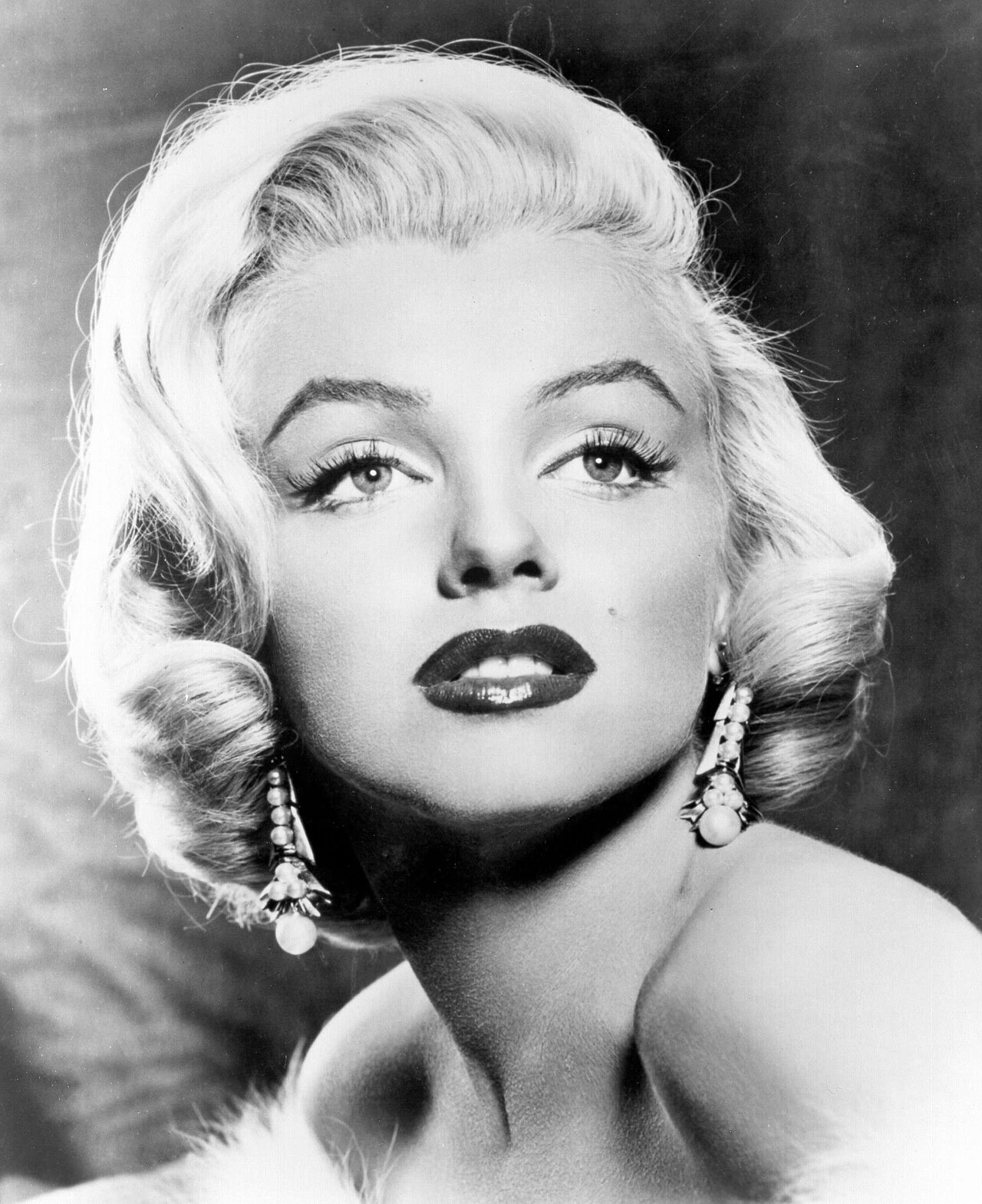
Marilyn Monroe, one of the most famous film stars in the world, was found dead in the bedroom of her home in Brentwood, Los Angeles, early on 5 August 1962. She was 36. The Los Angeles County coroner’s office ruled that she died of “acute barbiturate poisoning” due to “ingestion of overdose”, and that it was a “probable suicide”. Almost at once, theories spread that she had been murdered, most often because of her rumoured relationships with President John F. Kennedy and his brother Robert, the US Attorney General. Others suggested the Mafia or the CIA, or an accidental overdose. In 1982 the Los Angeles County District Attorney’s office reviewed the case and found no evidence of murder. The questions have never quite gone away.
Her last months
Monroe was born Norma Jeane Mortenson in Los Angeles in 1926 and spent much of her childhood in foster care and an orphanage. In the last year of her life she bought a Spanish-style house in Brentwood, the only home she ever owned. On 19 May 1962 she sang “Happy Birthday” to President Kennedy at Madison Square Garden in New York. On 8 June, 20th Century Fox fired her from the film Something’s Got to Give. She was being treated by a psychiatrist, Ralph Greenson, who had arranged for a housekeeper, Eunice Murray, to help and watch over her.
The night of 4–5 August 1962
According to the accounts given at the time, Monroe was last seen alive at about 8 p.m., when she went alone to her bedroom. In the early hours Murray saw a light under the locked bedroom door and called Greenson, who broke in through a window and found her dead. Her physician, Hyman Engelberg, came and pronounced her dead. The police were called at 4:25 a.m.
That timeline has been questioned ever since. According to the Associated Press, the theories rest on a gap of about 35 minutes between when her doctor declared her dead and when police were dispatched, on incomplete phone records, and on toxicology tests that were never done. The first police officer at the scene later said he had seen the housekeeper using the washing machine in the hours after the death. Murray’s own accounts of the timing changed over the years.
The official findings
The autopsy was carried out on 5 August by a deputy medical examiner, Thomas Noguchi, who later became Los Angeles County’s chief medical examiner and was known as the “coroner to the stars”. Toxicology tests on her blood supported the finding, though some of Noguchi’s other findings later fed doubts about the official account. The chief medical examiner, Theodore Curphey, also launched a new kind of “psychological” investigation, interviewing people who had known her. The office ruled the death a probable suicide. Samples of her stomach and intestines were later destroyed before they could be tested, as Noguchi acknowledged in his 1983 memoir.
The theories
The Kennedys. The most persistent theory holds that Monroe had affairs with John or Robert Kennedy and was killed to stop her from going public. The first published stories of an affair with Robert Kennedy appeared in a 1964 pamphlet by the right-wing writer Frank Capell. In the 1970s Robert Slatzer, who claimed he had been briefly married to Monroe, wrote a book arguing that she had been murdered. No record of such a marriage has been found. In 1985 Peter Lawford’s ex-wife claimed that the actor, the Kennedys’ brother-in-law, had gone to Monroe’s house that night and destroyed a note she had left.
The Mafia and the CIA. Other versions say that Mafia figures killed her to embarrass Robert Kennedy, who was prosecuting organised crime, or that the CIA was involved. In 2012 the author Jay Margolis, who wrote a book arguing the case for murder, said: “Marilyn Monroe was murdered.”
An accident. Some who knew her think she may simply have lost track of what she had taken. Her doctors were both prescribing sedatives. The photographer Lawrence Schiller, who knew her in her last days, said in 2012: “Was there a conspiracy to kill her? No. I don’t think so.” He thought it “more than likely” that she lost track of what she was taking.
The 1982 review
Twenty years after her death, the Los Angeles County District Attorney’s office reopened the case. “D.A. Finds No Evidence of Marilyn Monroe Murder,” ran a Los Angeles Times headline in late 1982. The review found no evidence of murder. An outside coroner’s expert concluded that even the most advanced procedures of 1982 would not, “in any reasonable probability, change the ultimate conclusions”. The deputy district attorney who ran the review, Ronald H. Carroll, later said that even if a note had been taken, “it is not clear that the taking of that note would have been a crime.”

The arguments, point by point
The timeline
Those who doubt the official record say: the delay in calling the police, the changing accounts and the housekeeper doing laundry suggest that the scene was handled before the police arrived.
The response: the 1982 review noted gaps, such as incomplete phone records, but found no evidence of murder. Engelberg said in recorded interviews that it was normal to call a mortician rather than the police when pronouncing someone dead.
The autopsy
Those who doubt it say: the autopsy findings did not fit the official account neatly, and the samples that could have settled the questions were destroyed.
The response: the 1982 review found no evidence of murder, and its outside expert said that more modern procedures would not have changed the conclusions. In a 2025 book by the historian Anne Soon Choi, Noguchi, by then in his late 90s, is reported to have said that suicide was possible, even probable, but had not been proven, because the organ tests were never done.
The Kennedys
Those who doubt it say: Monroe was close to both Kennedy brothers, and Robert Kennedy had reasons to keep her quiet.
The response: according to the writer Mel Ayton, who has examined the theories, Robert Kennedy spent that weekend with his family at a friend’s ranch near Gilroy, in northern California, and was seen there all day on 4 August. An FBI official, William Sullivan, later wrote that the stories about Robert Kennedy and Monroe “were just stories”. Her FBI file, re-released in 2012, shows that the bureau was aware of the murder theories but did not investigate them.
What is still argued about
- What happened in the hours between her death and the police being called.
- Whether the destroyed samples would have changed the conclusion.
- Whether she meant to die, or whether it was an accident.
No poll appears to have asked how many people believe she was murdered. Interest has not faded. In 2022 Netflix released The Mystery of Marilyn Monroe: The Unheard Tapes, based on interviews recorded by the author Anthony Summers. In 2024 Los Angeles made her Brentwood house a historic-cultural monument, and courts have so far rejected its current owners’ attempts to demolish it.
Sources
- PBS NewsHour, Howard Markel, “Marilyn Monroe and the prescription drugs that killed her” (2016)
- Biography.com, “Marilyn Monroe”
- History News Network, “How Did Marilyn Monroe Die?” (2012)
- Associated Press via Artdaily, “Many questions linger fifty years after Marilyn Monroe’s death stunned the world” (2012)
- Nippon.com, “Thomas Noguchi, Legendary Hollywood Coroner” (2014)
- American Heritage, “Who (or What) Killed Marilyn Monroe?” (2007)
- LAist, “Marilyn Monroe, RFK, John Belushi: the LA coroner who became ‘coroner to the stars’” (2025)
- Los Angeles Times via Yahoo News, “Why Marilyn Monroe’s sudden death still evokes mystery, questions 60 years later” (2022)
- CBS News, “Monroe Investigation Interviews” (2006)
- CBS Los Angeles, “New Allegations Emerge About Marilyn Monroe’s Final Hours” (2012)
- Crime Magazine, Mel Ayton, “The ‘Assassination’ of Marilyn Monroe” (2009)
- Encyclopedia.com, “Slatzer, Robert F(ranklin) 1927–2005”
- CBS Los Angeles, “Missing FBI Files On Marilyn Monroe Found, Made Public” (2012)
- Paris Match Belgium, on Noguchi’s comments in Anne Soon Choi’s book (2025)
- Netflix Tudum, “The Mystery of Marilyn Monroe: The Unheard Tapes” (2022)
- LAist, “Marilyn Monroe’s Brentwood home is LA’s newest historic-cultural monument” (2024)
- The Real Deal, demolition plans for Marilyn Monroe’s Brentwood home defeated (2025)
- Bloomberg Law, “Marilyn Monroe’s Final Home Saved From Wrecking Ball by Court” (2026)
- 988 Suicide & Crisis Lifeline
- Find A Helpline
