

The short version
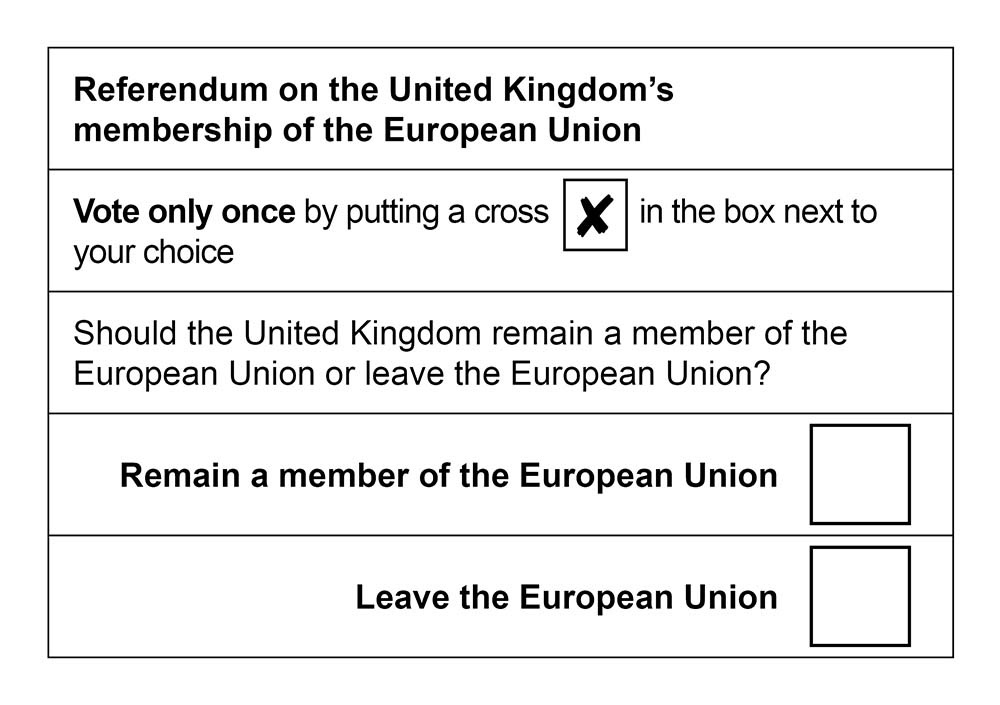
On 23 June 2016 the United Kingdom voted to leave the European Union, by 51.9% to 48.1%. In 2018 Christopher Wylie, who had helped found the political data firm Cambridge Analytica, told MPs it was reasonable to think the result could have been different without what he called “cheating”. At the same time the world learned that Cambridge Analytica had obtained data from up to 87 million Facebook users. The official Leave campaign, Vote Leave, had spent much of its budget with a Canadian digital firm, AggregateIQ. The Electoral Commission fined Vote Leave for breaking spending rules. But the UK’s Information Commissioner concluded in 2020 that Cambridge Analytica was not involved in the referendum beyond some initial enquiries, and that the Facebook data could not have been used in it. Whether online targeting changed any votes is still debated.
The firms
Cambridge Analytica was a brand of the SCL group. In 2014 a company set up by Aleksandr Kogan, an academic at Cambridge University, sold it data collected through a personality quiz app on Facebook. About 300,000 people used the app, but it also collected data on their friends. Facebook later estimated that up to 87 million people were affected, mostly in the United States, and at least a million in the UK. Cambridge Analytica shut down in May 2018. The UK’s Information Commissioner’s Office (ICO) fined Facebook £500,000, the maximum under the law at the time.
AggregateIQ, or AIQ, is a small firm based in Victoria, British Columbia. Vote Leave, which was allowed to spend £7 million, spent nearly £2.7 million with it. Vote Leave’s campaign director, Dominic Cummings, was once quoted on AIQ’s website saying: “We couldn’t have done it without them.”
The whistleblowers
Wylie, a data scientist who had left Cambridge Analytica in 2014, spoke to The Observer and its reporter Carole Cadwalladr, whose 2017 article had prompted investigations by the Information Commissioner’s Office and the Electoral Commission. In March 2018 he told the House of Commons culture committee: “I think it is completely reasonable to say that there could have been a different outcome in the referendum had there not been, in my view, cheating.” He said he “absolutely” believed AIQ had drawn on Cambridge Analytica’s databases for its Brexit work. Wylie said he had personally supported Leave. Cambridge Analytica said it “played no role” in the referendum, and AIQ said it complied with all legal requirements.
Shahmir Sanni, a former Vote Leave volunteer who had moved to a smaller youth group, BeLeave, said that Vote Leave had cheated and that the referendum “wasn’t legitimate”. Vote Leave said it had twice been cleared by the Electoral Commission.
Brittany Kaiser, Cambridge Analytica’s former director of program development, told MPs that the firm had done a first phase of work, using data from the UK Independence Party, for a separate Leave campaign, Leave.EU, co-founded by the businessman Arron Banks. She said the work was billed to UKIP and never paid for. Leave.EU denied it. In 2019 she released emails that she said showed the data was later used by Leave.EU without the firm’s further help.
What the regulators found
In July 2018 the Electoral Commission found that Vote Leave and BeLeave had worked “to a common plan” and broken the legal spending limit, and fined Vote Leave £61,000. Vote Leave called the findings “wholly inaccurate” and politically motivated, but dropped its appeal in 2019 and paid. A court overturned a separate fine on BeLeave’s founder in July 2019, and in May 2020 the Metropolitan Police took no further action. Leave.EU was fined £70,000 in 2018 for failing to report spending. The police later found “technical breaches” but took no further action.
In February 2019 the culture committee said electoral law was “not fit for purpose” and asked for an independent investigation into the 2016 referendum.
In October 2020 the Information Commissioner, Elizabeth Denham, sent Parliament her final account. She wrote that she had found no further evidence to change her view that Cambridge Analytica was “not involved in the EU referendum campaign in the UK - beyond some initial enquiries” relating to UKIP data. The Facebook data “could not have been used in the Brexit Referendum”, she said, because it related to US voters. Cambridge Analytica “did appear to do a limited amount of work for Leave.EU”, analysing UKIP membership data rather than Facebook data. She also said the firm’s claim to hold thousands of data points on 230 million adult Americans “may have been an exaggeration”. The ICO did find that Vote Leave had given personal data to AIQ to build “lookalike” audiences on Facebook, and Canadian privacy regulators found in 2019 that AIQ had not had adequate consent to share that data with Facebook.
The arguments, point by point
The data swung it
Those who believe it say: the result was close, Leave broke the spending rules, and much of that money went on highly targeted Facebook advertising. The culture committee concluded that the law could not cope with online campaigning. Cadwalladr has argued that the result was driven by misleading Facebook ads aimed at swing voters.
The response: the ICO found that Cambridge Analytica played almost no part in the referendum and that the Facebook data was not used. The BBC noted that it was impossible to say how Vote Leave’s overspending affected the result. Research on online political ads suggests small effects: a study of 59 experiments in the 2016 US election found that ads had a “statistically insignificant” effect on whom people intended to vote for, though one of its authors, Alexander Coppock, said this did not prove political advertising is always ineffective.
A story that grew too big
Those who say so argue: the scandal mixed up separate things: Cambridge Analytica’s work in the United States, AIQ’s work for Vote Leave, and Leave.EU’s dealings with Cambridge Analytica. Cadwalladr was sued for libel by Arron Banks, the main funder of Leave.EU, over a claim in a 2019 talk about his relationship with the Russian government. She dropped her defence that the claim was true, and in 2023 the Court of Appeal ruled partly in Banks’s favour.
The response: the official findings still confirmed rule-breaking by both Leave campaigns. Cadwalladr won on other parts of the case, and the courts found that her talk had been in the public interest when she gave it.

What is still argued about
- Whether targeted online ads moved enough votes to change a result decided by about 1.3 million votes.
- How close the relationship between AIQ and Cambridge Analytica was. The ICO found evidence of a very close relationship, which AIQ denies.
No poll appears to have asked Britons whether data firms changed the result.
Sources
- GOV.UK, “EU referendum”
- BBC News, “EU Referendum Results” (2016)
- BBC News, “Brexit: Vote Leave broke electoral law, says Electoral Commission” (2018)
- BBC News, “Facebook fined £500,000 for Cambridge Analytica scandal” (2018)
- Information Commissioner’s Office, letter to the DCMS Committee on the investigation into political data use (2020)
- Meta, “An Update on Our Plans to Restrict Data Access on Facebook” (2018)
- NPR, “Cambridge Analytica Is Shutting Down After Facebook Data Controversy” (2018)
- CBC News, “Whistleblower says ‘cheating’ may have changed Brexit vote outcome” (2018)
- NPR, “‘They Don’t Care’: Whistleblower Says Cambridge Analytica Aims To Undermine Democracy” (2018)
- PoliticsHome, “Vote Leave accused of breaking campaign spending limits during EU referendum” (2018)
- The Register, on Brittany Kaiser’s evidence to MPs (2018)
- TechCrunch, “Brittany Kaiser dumps more evidence of Brexit’s democratic trainwreck” (2019)
- Electoral Commission, statement on the Metropolitan Police investigation into Vote Leave and BeLeave, via WiredGov (2020)
- The Telegraph via Yahoo News, “Police drop investigation into Brexit campaigners accused of breaching spending rules” (2020)
- PoliticsHome, “Met Police to take no further action over Leave.EU spending” (2019)
- House of Commons DCMS Committee, summary of “Disinformation and ‘fake news’” (2019)
- Office of the Privacy Commissioner of Canada, “Joint investigation of AggregateIQ Data Services Ltd.” (2019)
- TED, Carole Cadwalladr, “Facebook’s role in Brexit — and the threat to democracy” (2019)
- Court of Appeal, Banks v Cadwalladr [2023] EWCA Civ 219
- Judiciary of England and Wales, press summary of Banks v Cadwalladr (2023)
- Yale News, “Political ads have little persuasive power” (2020)